
Financial, policy agenda looks like part of plan to ‘dismantle public schools’
by Tim Carpenter, Kansas Reflector
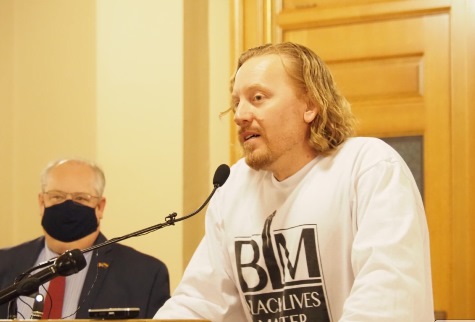
Topeka — Classroom teacher Michael Rebne has a sense of foreboding about a series of bills percolating in the Kansas Legislature to reform of the K-12 public education system.
He’s taken note of Kansas and Senate bills that restrain teachers from nimbly adjusting a student’s approach to learning, funnel tax dollars to private schools, abandon child vaccination programs, dive into critical race theory, incentivize teachers to boost student test scores, label library books for violent or sexual content, and allow virtual or homeschool students participate in public school sports and extracurricular activities.
“I feel like it’s targeted against public schools and educators to make us feel marginalized, to make us feel vulnerable, to make us feel distrusted,” said Rebne, a teacher in the Kansas City, Kansas, district. “And, ultimately, to I think that the end goal there for the right is to dismantle public schools.”
Rebne said there were bills introduced in the Legislature that appeared to be attempts to pick on poor students and students of color. That kind of politics is reason enough for educators to be politically active, he said.
He joined Tonganoxie middle school teacher Kathy Harrell and Shawnee Heights school board member Lauren Tice Miller on the Kansas Reflector podcast to offer their perspective on education issues one month in to the 2022 session.
Uneasy with vilification
Harrell said tone of the discussion on education policy at the Capitol indicated the point was to indict teachers devoting themselves to educating more than 400,000 public school students in Kansas. Some bills and some rhetoric reads like attempts to vilify public school educators, she said.
“The vast majority of us are people that truly care about our communities, that care about our students,” she said. “We really do have the best interests of our students at heart. You know, ask us directly what’s going on. We would appreciate that courtesy.”
Harrell said there was no groundswell of parent or community demands for an overhaul of Kansas’ public education system. She said she’d never been personally approached by a parent questioning her approach to teaching history.
Tice Miller, who also works as a lobbyist with the Kansas National Education Association, said lawmakers won’t get a clear picture of what’s going on in the state’s public schools without hearing from a range of teachers and administrators. Legislative work typically occurs Monday through Friday, days when classes are in session in schools. It’s difficult for educators, students and parents to participate in the process, she said.
“If you truly want an opportunity to hear from teachers and parents have a hearing on a Saturday,” she said.
Tice Miller said an example of inhibiting parent and teacher involvement in the legislation process was borne out at hearings on a proposed parental bill of rights covering access to information about a school or a child’s educational curriculum, examinations and reading materials and a teacher’s professional development initiatives. Pending legislation shreds emphasis on getting children vaccinated, but impose new costly requirements for school district websites that catalog information about all instructional materials potentially shared with students.
She said a House committee allowed supporters of the reform bill to divide 30 minutes of testimony among three supporters of the bill. However, opponents of the legislation had 2 minutes each. Ironically, she said, the bill would require school boards accommodate a member of the public who wanted to speak during meetings. School boards have open comment periods at meetings, she said, but a House chairwoman opted to silence critics.
“There’s a belief that there’s secrecy and that things are being taught in the classroom that aren’t actually being taught,” Tice Miller said.
Test score bonuses
Legislation pending in Topeka would require teachers to publish online references to books and other materials used to teach students.
“It would require teachers to publish all of their items before the beginning of school and not deviate from it because of the fear of litigation or penalty of having their funding stripped,” Tice Miller said. “We think there would be a severe chilling effect, because teachers wouldn’t be able to be spontaneous in the classroom.”
Harrell said questions were justifiably raised about a bill that would covert about $50 million targeted at at-risk students to teacher bonuses based on student improvement on academic subjects. How could you equitably give that money out? How do you assess a kindergartner? And it certainly does not reflect why we go into education.”
“No one goes into education to get rich,” Harrell said. “That’s such an oversimplified view of what teaching is. It certainly does not reflect why we go into education. what education is about.”
Rebne said compensation research showed teacher bonuses didn’t result in higher student achievement. It would, he said, demoralize teachers and put them in a position of competition rather than collaboration necessary to deliver an education to students.
“It would ultimately hurt students of color the most who have the most historically to lose and the most bias against them when it comes to these standardized tests,” Rebne said.
Pandemic teaching
Rebne said the legislative push against public education in 2022 followed two years of the COVID-19 pandemic that disrupted in-person instruction, triggered conflict over masks and vaccinations, and led to shortages of substitute teachers. It’s required all in public education to be flexible and adaptive, he said.
“A lot of teachers have been talking seriously about leaving the profession — leaving the profession permanently,” he said.
Harrell and her husband both teach school, and they’ve concluded working in the education system amid the pandemic has been like learning to fly a plane while in the air.
“I think we have risen to the occasion,” she said. “And, for the most part, you know, got through the best we could.”
Tice Miller said the two years had been full of stress for school board members responsible for making district decisions about the coronavirus. It’s been a rollercoaster ride for students, staff and teachers, she said.
“When the when the pandemic first started, teachers were hailed as the heroes,” Tice Miller said. “Then there was a period of time when the the narrative shifted a little bit and the attitude changed. People started, you know, directing their frustrations towards school board members and and towards our teachers. And quickly we were seeing our teachers becoming the villains.”
Kansas Reflector stories, www.kansasreflector.com, may be republished online or in print under Creative Commons license CC BY-NC-ND 4.0.
See more at https://kansasreflector.com/2022/02/21/two-teachers-school-board-member-wary-of-proposed-k-12-legislation-in-kansas/.