Donnelly College will hold “Donnelly Talks,” an evening of thought-provoking conversation, on Wednesday, March 11.
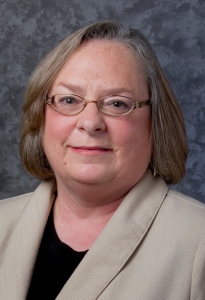
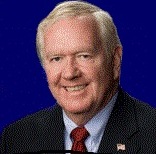
The lecture led by Monsignor Stuart Swetland, Donnelly president, and Melissa Lenos, a faculty member, will focus on pop culture in a theological setting.
Titled, “From Harry Potter to the Hunger Games: Theological Perspectives on Popular Young Adult Literature,” the discussion is open to Donnelly students, faculty, staff and the public.
Donnelly Talks is free and open to the public, and will run from 7 to 8:30 p.m. Space is limited and reservations are required. Reservations may be made to Craig Doty, annual fund manager, at cdoty@donnelly.edu.
It has been a very eventful week at the State Capitol. Committee work continues to be very robust, as well as action on bills on the House Floor. In the House, Judiciary Committee hearings were held regarding a constitutional amendment for judicial selection. In Vision 2020, the KanCare II expansion bill that would provide medical coverage for more Kansans was introduced.
On Thursday, students from Kansas City Kansas Community College, Joseph Lutz and Wendy Monarres, were recognized on the House Floor as a part of the Kansas All-State Phi Theta Kappa Academic Team for 2015. I enjoyed the opportunity to visit with KCKCC President Doris Givens and others from KCKCC who accompanied the students to Topeka.
Representatives from the Kansas tourism Industry from across the state were in Topeka on Wednesday to promote the unique attractions in their areas. It was great to see Bridgette Jobe, Kurt Mayo, Tim Ryan, Kerry Green and Celeste Mikijanis representing KCK.
It remains an incredible honor to represent our community in the Kansas House of Representatives. While the Legislature is in Session, I do my best to stay in touch and keep you informed by email, and I spend countless hours every week helping my constituents solve problems. If I can be of service to you or anyone you know, call my office at 785-296-7371, or email me at pam.curtis@house.ks.gov.
Kansans First
This week I was proud to join fellow Democrats by signing onto the Kansans First initiative, a series of policies to help Kansas families. Kansans First is aimed at giving working Kansans the opportunity to succeed and prosper, and includes the: Hire Kansans First Act, a living wage bill, and reinstituting prevailing wages.
Hire Kansans First Act
The Hire Kansans First Act requires contractors receiving taxpayer dollars or tax incentives to hire a workforce composed of at least 70 percent Kansas residents. The bill will prevent the out of state exportation of labor and will keep jobs in Kansas.
Kansas Living Wage
Unfortunately, too many Kansans are trying to make ends meet with far too little. The livable wage bill will increase the Kansas minimum wage by 56-percent over five years, to $11.32. The bill then ties the livable wage to the federal poverty line so it will continue to increase with inflation. A livable wage is critical to combating poverty and working towards a more prosperous Kansas.
Annual Minimum Wage (per year)
2015 $7.25
2016 $8.06
2017 $8.87
2018 $9.68
2019 $10.50
2020 $11.32
2021 and on Annually amended to 200% of Federal Poverty Line
Prevailing wage
Two years ago the Kansas Legislature prohibited municipalities from requiring contractors to pay prevailing wages, or a set market value hourly wage. This bill will reverse that action and will return local control to municipal governments, because Kansas workers deserve adequate compensation.
Maintaining local spring elections
There is a proposal that calls for the partisan election of school board and municipal officials to take place in November rather than the spring, when they currently occur. Local elections transcend partisan politics, and focus on the issues facing communities rather than party agendas.
The continued assault on Kansas education
During the campaign the governor promised to protect education funding, but since beginning his second term, The governor and his legislative allies have continued the assault on public education by:
• Issuing an allotment that would rescind 1.5 percent of each school districts budget for this year, and 2 percent from state universities, totally more than $44.5 million,
• Postponing the transfer of $20.8 million in Capital Outlay funds to June, and
• Proposing a bill which would change the way the state computes local option budgets equalization funds, immediately cutting more $39 million from local districts.
The individual cuts to education add up. As school districts begin to feel the pressure, so do students. As class sizes begin to rise, teachers are laid off, and programs are cut. We need to continue to invest in our most valuable asset, our children, doing otherwise is irresponsible.
Governor’s executive order
Earlier this week the governor issued an executive order removing sexual orientation from the list of protected classes for state employees. The regressive and discriminatory action from the governor is merely another attempt to play party politics in order to distract from the serious budget crisis facing our state.
Legislative newsletter from Sen. Steve Fitzgerald, R-5th Dist.
Focus on the budget
Budget cuts have all the attention and probably will for the rest of the session. Funding adjustments have been made for the 2015 budget and more are coming up for the 2016 – 2017 budget.
Balancing has been a challenge with surprise expenses, such as an approximately $60 million unforeseen increase in the K-12 education budget and a suddenly discovered $20 million federal tax on KanCare (Obamacare includes a tax on health care – now we know).
Many of the “cuts” are actually reductions in increases. Year over year most, if not all, of the budget continues to increase. The screaming we hear is because the increases are not as high as expected. Not that there shouldn’t be increases – in some cases there should – but, lower taxes and smaller government means reductions in spending must be made.
KPERS is one area that has drawn a lot of attention. Recently, extra funding has been put into KPERS to fix a serious and long-standing hole. It had slipped to almost last place among the retirement systems of all the states for actuarial stability. It is now better funded than about half of the states and $500 million extra is being put into the fund to help continue its improvement.
The additional funds are being added to insure the long term health of the system. Retirement funding is essential to keeping the contract that the state has with its employees and the state must have the means to fulfill that contract. Now, $58 million of the $500 million extra money will be kept in the bank at least for the time being as the transfer of that money into KPERS has been delayed. To put this in perspective, KPERS has approximately $17 billion invested and the $58 million is three thousandths of a percent of the total we are trying to increase. The recently raised employer contribution rate has also been brought back from 11.27 percent to 8.65 percent. This means that improvement in KPERS continues but it is being slowed.
Education funding is also getting some cuts to the increases. Again, the year over year expenditures continue to increase even after the cuts. More is being spent this year than last and more yet is budgeted for the following years. However, the increases that were budgeted for this year went from $129 million in May when passed by the legislature to over $190 million in November – and it is hard to understand how that increase happened. I have had several explanations provided – none very satisfactory.
All of the school personnel I spoke with after last session were satisfied with the $129 million – then the number ballooned and there is much consternation that the balloon is being deflated and part of that unintended increase is being “clawed-back” and other reductions are being put in place as well. The reality is that even with the “cut,” fiscal year 2015 education spending remains $197 million higher than 2014.
Kansas Department of Transportation has indicated in committee hearings that no T-Works projects will be delayed due to the transfer of $158 from the state highway fund. However, some preservation projects would be delayed.
Reduced taxes have left $760 million in the taxpayers’ pockets and have also made it difficult to increase spending in the manner to which we had become accustomed. I voted against the budget last year because spending was too high and could not be sustained. This is a slowing of the long term trend of rising government expenses and taxes and it is long overdue. Shuffling funds around is necessary in the very short term but a more structured approach to spending cuts must be pursued.
Some bills of note
Only a few bills have already been passed by the Senate. Of note is the rescission bill that cuts the current budget and the change to joint rules. The main topic is the bundling of bills (bundling is the inclusion of related bills or parts of bills that have been heard but did not pass in both houses). The House amendment would allow a limit of two bills to be bundled but the Senate non-concurred and a compromise was reached to establish a limit of five bills except for allotment and tax bills.
Rep. Rubin is to be applauded for bringing this up. I expect bundling will be further reduced in the future. Also, the rules continue “Pay Go” which requires that increases in spending be matched with equal cuts. The net effect is more serious legislation concerning finances, a more efficient process, and significant savings for the taxpayer.
SB 45, Concealed Carry. This bill allows Kansans to carry weapons concealed without a permit if they otherwise may legally do so. Permits will continue as many people want to carry in other states and most of the other states recognize the Kansas permit. Check the laws of any jurisdiction in which you intend to carry.
SB 60, Home school children on sports teams. This would permit home schooled children to play on teams at public schools where they would normally attend. The bill was strongly contested in the education committee. Cost and the issue of equity were the main issues. Students are often subject to many restrictions and requirements in order to qualify for teams (attendance, grades, etc.) allowing home schoolers on the teams seemed unfair to some of the conferees. Opposing arguments were that home school families pay taxes that support school districts but get virtually no direct benefit and that home school parents are responsible or making sure their students are progressing academically – just as parents of public school students should be. The bill is still in committee.
SB 139, Mayor Ken Bernard memorial highway. A hearing on this bill was Feb. 10. Mayor Bernard served as mayor for Lansing for 29 years and this bill will put his name on that portion of Kansas Highway 7 that goes through Lansing.
SB 71, Amending supplemental general state aid calculation. This bill was heard on Feb. 3 in the Senate Ways and Means Committee. The bill seeks to change the calculation underlying equalization payments to school districts. During the hearing it came out that under the current calculation this year affluent school districts in Johnson County received over $55 million to make up for their “poverty,” including over $7 million for Blue Valley and Shawnee Mission. This is part of the money that is being “clawed-back” in the rescission bill. It is obvious that a new formula is required to get needed resources to school districts.
SB 10, Filling vacancies on governing bodies. This bill is in the Ethics and Elections Committee and is designed to help prevent a recurrence of the situation Wyandotte County where a council position has been vacant for two years.
Help Kansas Vote Act. This act is expected to have a hearing this week. It will change elections for city commissions and school boards to November and make them partisan. Proponents say that it will increase voter turnout, which, for these elections, now held in April, has dropped to embarrassingly low numbers.
Please let me know your thoughts on these and other bills that are coming before the legislature.
I would love to have you visit and sit in on our committee meetings and Senate session. It is your legislature and your statehouse. Thank you for the honor of serving you.