
Opinion column: RadioShack closing marks end of era

Store closing brings back decades of memories. (Photo from Murrel Bland)

Views

by Murrel Bland

The RadioShack store in the Wyandotte Plaza Shopping Center at 78th and State Avenue closed recently. A note on the door said the store is being remodeled and will reopen soon as just a Sprint store. It is an unfortunate end locally to a retailer that continues to struggle in a changing market.

I recall when RadioShack came to Wyandotte Plaza. It was the summer of 1969 when a young enthusiastic manager, Ken Jones, opened the store. He moved to Kansas City, Kansas, from San Diego where he was also with RadioShack.

A story in the Sept. 18, 1969, issue of The Wyandotte West told of all the items that the store offered—all types of radios—AM, FM, CBs and walkie-talkies—along with tape recorders, microphones and even electronic bug killers. Jones said the response to the store’s grand opening was very good. The store was located at the eastern end of the center in a space formerly occupied by the Woods-Balke appliance store.

RadioShack can trace its roots to 1921 when it owners, Theodore and Milton Deutschmann, founded the company in Boston. The brothers saw the need to provide equipment for the emerging field of amateur radio. The company published its first catalog in 1939 and moved into the direct mail business. RadioShack fell into hard times during the early 1960s. The Tandy Corporation, a leather goods company based in Ft. Worth, was looking for a related business that would complement its hobbyist products. In 1962, RadioShack sold for $14 million and the company became Tandy RadioShack and Leather.

Tandy closed RadioShack’s unprofitable mail-order business, ended its credit purchases, eliminated several top management positions and cut the number of items sold from 40,000 to 2,500. Such things as go-carts and musical instruments were eliminated from the product line. Charles Tandy, who had guided RadioShack through this change, died of a heart attack in 1978.

One of the successful RadioShack promotions was the “Battery of the Month Club” which offered a free battery each month. This, along with free tube-testing, generated considerable in-store foot traffic.

The 1982 breakup of the Bell Telephone system allowed subscribers to buy their own telephones. RadioShack offered some 20 models of home phones. RadioShack attempted to compete in the big-box electronic market with McDuff, Video Concepts and Edge in Electronics in the early and mid-1990s. That was not successful.

RadioShack was successful with its TRS-80 computer. However, it failed to keep up with the personal computer market.

In 1998, RadioShack claimed to be the largest seller of consumer telecommunication products in the world. On May 10, 2017, its stock was trading for 31 cents a share. So what happened?

Maybe the market forces have changed and RadioShack did not keep up. I read a column in the electronic edition of The Lawrence Journal-World that Chad Lawhon wrote about the closing of the last RadioShack in Lawrence. He said the stores were often helpful.

“I would get 10 minutes of advice, a $2 part, and with such knowledge and supplies, I could fix any audio/video device—as long as either of my children were around to help me operate the remote control,” Lawhon said.

I could identify with Lawhon’s comments. I recall shopping at the Wyandotte Plaza store. The advice was good—I learned how to hook up supplemental speakers to my TV. And a helpful clerk programmed the radios that my wife and I took to Kansas Speedway.

But the last time I was in the Wyandotte Plaza store, it did not have the cable I needed. (I was able to get it online, however.) The clerk was polite, but not nearly as knowledgeable as those who had waited on me in past years. I did buy some batteries however.

As part of the bankruptcy agreement, Sprint is taking over 1,750 RadioShack stores. Apparently that is what is happening in Wyandotte Plaza. Of course Sprint faces an uncertain future in the highly competitive telecommunications market.

A major influence in the retail market today is the impact of the internet. It is quite easy to order just about any product online and have it delivered within a couple of days—or sooner, if you are willing to pay for it. The giant 40-acre Amazon warehouse being built off the Turner Diagonal is a sign of the changing retail market.

Murrel Bland is the former editor of The Wyandotte West and The Piper Press. He is the executive director of Business West.
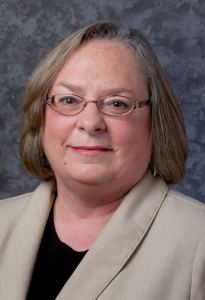
Legislative newsletter from State Rep. Pam Curtis, D-32nd Dist.

Rep. Pam Curtis

by State Rep. Pam Curtis, D-32nd Dist.

The Kansas Legislature reconvened for the veto session on Monday, May 1. There are three major issues that remain to be addressed and resolved: a fair tax plan, an adequate school finance formula, and a structurally balanced budget. Medicaid expansion is high on the list, as well as gun safety laws (particularly on college campuses and in state hospitals).

It is a special honor to serve as your state representative. I both value and need your input on the various issues facing state government. Feel free to contact me with your comments and questions. My office address is Room 452-S, Kansas Statehouse, 300 SW 10th, Topeka, KS 66612. You can reach me at 785-296-7430 or call the legislative hotline at 1-800-432-3924 to leave a message for me. Additionally, you can email me at pam.curtis@house.ks.gov.

You can also follow the legislative session online at www.kslegislature.org.

Taxes
A lot of the week consisted of debates and negotiations as the legislature attempts to find a fair tax plan. While there was much discussion of the topic, no actual bills came to fruition, and no votes were held. Kansas House Democrats believe that before a solid tax plan can be formed and passed, school funding must be addressed.

Medicaid expansion rally

On Tuesday, a rally was held outside of the Capitol building for Medicaid expansion. Several of our own Democratic House representatives spoke at the rally, which was attended by a crowd of people in favor of expansion.

The Kansas House and Senate both passed Medicaid expansion in their separate chambers, but the governor vetoed the bill. It went back to the House floor for a veto override vote. To override a veto, the House requires 84 votes. The vote fell short by just three, but Kansas Democrats will continue to fight for expansion and exploring ways to get it done during veto session.

Bills passed through the House

HB 2184: An act concerning economic development; relating to the STAR bonds financing act; historic theater project costs; establishment of district; adverse effects on county or school district; certain notices; approval for transient guest tax funding; sunset date of the act.

SB 201: An act concerning the Kansas consumer protection act; relating to the definition of protected consumer.

Legislation aims at revenue shortfall

Views
Opinion column

by Murrel Bland

Taking one-time money from the long-term investment funds should solve the immediate cash flow problem of about $290 million for the state of Kansas fiscal year that ends June 30, 2017.

That was the view of State Rep. Kathy Wolfe Moore, D-36th Dist., who was a member of a legislative panel at a coffee held Saturday, April 8, at the West Wyandotte Library. The League of Women Voters of Johnson County, the NAACP of Kansas City, Kansas, and the Kansas City, Kansas, Public libraries sponsored the event. About 20 persons attended.

Rep. Moore said this would be a short-term solution and would not address the $1 billion shortfall predicted through 2019. This short-term proposal has passed both houses of the Kansas Legislature and awaits Gov. Sam Brownback’s signature.

State Sen. Steve Fitzgerald, R-Fifth Dist., said that state government spending is at an all-time high. Major industries in Kansas, including gas and oil and agriculture, are suffering and therefore producing less tax revenue. However, the state has not made necessary cuts in spending, Sen. Fitzgerald said.

The panel agreed that, even though Kansas is facing fiscal problems, it is not as severe as in those states such as Oklahoma, Wyoming or Alaska that are highly dependent on tax revenue from gas and oil or coal, or both.

Sen. Fitzgerald said there is a need for more funds for the Kansas Department of Transportation. There have been proposals to increase the gas tax to fund road work.

There was discussion about the “Uncork Kansas” legislation that would let grocery stores sell Kansas strong beer. This proposal has been before the legislature for the past several years. Apparently a compromise has been reached among liquor store owners and grocery stores. The liquor stores would be able to sell other items such as ice and party supplies. Presently grocery stores can sell only 3.2 beer. The Alcohol Beverage Control agency would handle the details of how the grocery store personnel would sell strong beer.

State Rep. Stan Frownfelter, D-37th Dist., said despite this compromise, he predicted it would hurt the existing Kansas liquor stores; all are individually owned. He said he has contacted every liquor store in Wyandotte County.

A man in the audience said he was concerned because of a 20-percent increase in the valuation of his home. He said he is retired and living on a fixed income and fears a substantial property tax increase.

Sen. Fitzgerald said valuations are set by the Unified Government. He suggested that the man might want to appeal his valuation to the Kansas Board of Tax Appeals.

When asked if there might be another attempt to override Gov. Brownback’s veto of a bill that would attract more federal Medicaid funds, Rep. Moore said she did not expect it. Various health care professional organizations, including the Kansas Hospital Association, have urged passage of the bill. Those opposed to it have said it would cost the state too much money long-term; besides, opponents said it is uncertain how long the funding source, the federal Affordable Care Act, will be in effect because of opposition from Congress and President Donald Trump.

Murrel Bland is the former editor of The Wyandotte West and The Piper Press. He is the executive director of Business West.