
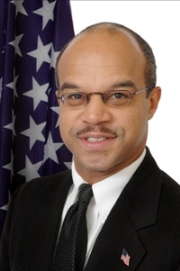
Guest column: Haley not endorsing anyone for mayor’s contest in general election Tuesday

Sen. David Haley

(Editor’s note: David Haley, a state senator who ran for mayor in the primary election, is not publicly endorsing anyone for the general election, and is not a write-in candidate. He wrote this column concerning his views on the subject.)

by David Haley

First, let’s acknowledge the genuine pride and appreciation I have for those who supported the Haley for UG Mayor 2017’s campaign efforts. It is the most humbling part. Against a backdrop of staggering odds, these are our neighbors who believe that Wyandotte County’s best hope this year was actually in having an executive leader who would deliver after the election on the commitment to uplift the ever overlooked, and taken advantage of, quadrants and people of our county; which each mayoral candidate pledged to do before the election.

Although that opportunity for all in our beloved county to grow may have best lain in proven, aggressive, immediate leadership which I intended to espouse as the only real choice from the then filed, and now remaining, alphabetically, Mr. Alvey’s and Mr. Holland’s, corporate-rewarding status quo.

Accordingly, with integrity and public expectation intact, and being skeptical of either’s true intent of:

A) Reinvesting our “Village West’s windfall” now in small business commercial and residential housing reoccupation along the main corridors of our county’s eastern half;

B) Bringing review and, wherever possible, diminishing some inequity from the BPU “PILOT” and other irresponsible “city”-related surcharges; while instilling transparency in our never-reviewed-since-1997 enabling Unified Government charter, which glaringly, allows a powerful Mayor (whether public servant or despot) to serve an unlimited number of terms, prevents half of the Commission from vying for Mayor without giving up their seat(s), and a host of other anti-democratic election-related anachronisms;

C) Paralleling Bonner Springs and Edwardsville’s UG tax contributions with greater parity of return by the UG to these cities’ necessary services;

D) Aligning our employee pool with more fiscally responsible intake and measured spending for greater public accountability; as well as

E) Restoring a more direct and personal relationship between our citizenry and our local leadership as well as other advancements.

I, David Haley, am not (as repeatedly flattered by having been asked) a write-in “candidate” for any office in 2017 and will only be voting for candidates printed on the General Election ballot for Mayor, Sheriff, Commissioner and the boards for the BPU, USD 500 and KCKCC. But I am not sharing those said choices publicly. Worst case scenario, as a public and responsible elected official, I wouldn’t want to be held responsible for influencing any vote for another Mayor who, if history sadly is any indication, will not meaningfully address between now and 2021 what has not been addressed heretofore.

But finally, optimistically, as we all collectively celebrate twenty years of this marginally successful experiment called “City-County Consolidation,” let us all prepare to be pleasantly surprised by the true progress (beyond all of the expensive “master plan” exercises, campus and neighborhood redevelopment studies; symbolic name-changes and ribbon-cuttings which energize, placate, targeted congregations and constituencies, etc. that comprises most of all we historically get from City Hall today) that, alphabetically, Mr. Alvey or Mr. Holland will as Mayor-CEO exercise and a “Unified Government” that reinvests in our history, our cultures, our entrepreneurship and newfound revisited charter integrity over these next four years.

Thank you again to all of those who supported optimism and real change in the primary by honoring me with your support, your voice and your vote. Please. Vote on (or before) Nov. 7, 2017.

As we have seen in so many examples, when we all don’t vote, we don’t count.

David Haley, J.D. – State Senator – Kansas from the 4th District, Wyandotte County
Primary candidate for Mayor – Unified Government of Wyandotte County – Kansas City, Kansas

Column: Consolidated government marks 20 years

Opinion column
Views

by Murrel Bland

The Unified Government recently celebrated the 20th anniversary of the merger of city and county governments in Wyandotte County. A group of Unified Government officials along with community leaders marked the occasion with a dinner at the recently remodeled Memorial Hall.

It was a “feel-good event” celebrating the merger and the accomplishments that followed including the development in the Village West Area. For me, it was an opportunity to look back at the history of the county and to trace the roots of the consolidated government.

In the fall of 1961 and the spring of 1962, I was a junior at the University of Kansas, Lawrence. I lived in the second story of a house just north of campus with two housemates — Jed Hurley, a law student, and Joe McKenna, a political science graduate student.

I wasn’t aware of it at the time, but McKenna was working on a study of the consolidation of city-county governments in Wyandotte County. His report, published by the Governmental Research Center at KU, showed that these governmental units were both inefficient and expensive.

Consolidation of city and county governments in Wyandotte County was first proposed in 1937 — some 60 years before it happened. There were various studies and proposals along the way.

A major factor of why it finally happened was geography with the city of Kansas City, Kansas, covering most of county. When it finally did occur, the cities of Bonner Springs and Edwardsville were protected — they would be able to keep their municipal governments. Instead of dealing with county government, these smaller cities would deal with a Unified Government.

The word at the celebration was that Village West development — particularly the luring of the Kansas Speedway — happened because of a consolidated government. I’m not for certain that is entirely correct. The case can be made that it was easier because developers had to deal with only one set of officials.

However, the site was chosen primarily because of access at the intersection of I-70 and I-435. It is reasonably easy for race fans to get in and out of the track complex. And I believe any project that big would have had support from county commissioners if they would have been in power. The city and county commissioners supported the General Motors plant during the 1980s.

In looking at the history of consolidation, it is important to note what happened in the early 1980s. For many years, city and county governments were racked with patronage and corruption. In the 1950s, all three city commissioners were indicted, although none was convicted. Unfortunately, the damage was done and severely damaged the city’s reputation. Although there weren’t any indictments in subsequent years, wrangling among the commissioners led to public embarrassment.

The City Commission appointed a special study committee that spent most of 1981 studying city government and what could be done to improve it. I served on that committee. The recommendation was to change from a commission form to a mayor-council form with a professional administrator. In 1982, by a slim margin, voters approved this change.

Leading the effort to change the form of government was O.L. Plucker, the superintendent of Kansas City, Kansas, School District and Bill Little, the president of the Kansas City, Kansas, Area Chamber of Commerce. Voters in that election rejected the stranglehold that patronage politicians had on city and county government. Had that reform not occurred, I seriously doubt that consolidation could have followed some 15 years later.

Murrel Bland is the former editor of The Wyandotte West and The Piper Press. He is the executive director of Business West.

Column: Pitch made for new airport terminal

Views
Opinion column

by Murrel Bland

In the 1950s, it became obvious that as air travel continued to grow, Municipal Airport in Kansas City, Mo., would soon outgrow its space. One of the proposed solutions was to combine Municipal with the nearby Fairfax Airport across the Missouri River. The opportunity was there to create a bi-city airport authority with runways stretching across the Missouri River. However, it never happened.

The major reason it didn’t happen was a matter of trust. The Kansas City, Kansas, City Commission didn’t trust the Kansas City, Mo., City Council and vice versa.

Looking back on that experience, it is quite understandable why there was a feeling of mistrust. Kansas City, Kansas, commissioners were indicted on charges of corruption, although none was convicted. And the ghost of Tom Pendergast, the longtime political boss, still haunted Kansas City, Mo., City Hall.

So Kansas City, Mo., officials searched for a new airport site, looking in Clay County. However, land costs were too expensive. They settled at the present site in undeveloped Platte County just south of Platte City.

Fast-forward to 2017. Joe Reardon, a former mayor of Kansas City, Kansas, was the featured speaker Friday, Oct. 20, at a meeting of the Congressional Forum at Children’s Mercy Park. Reardon is now the president of the Greater Kansas City Chamber of Commerce. He spoke about the need for a new airport terminal.

Voters in Kansas City, Mo., will go to the polls Tuesday, Nov. 7, to decide the fate of the new airport terminal. Kansas City, Kansas, residents do not vote on it. Reardon said it will be important for everyone who has friends in Kansas City, Mo., to encourage a “yes” vote on the new terminal issue. It will not raise taxes; the airport is funded by those who use it. His presentation last Friday was his 95th.

Reardon said the airport opened in 1972. During its first year of operation, the airport served about 3.8 million passengers. In 2016, that number had grown to nearly 12 million.

A change in security is a major factor that is demanding a new terminal, according to Reardon. Airlines, particularly Southwest, are insisting on more efficient security systems that can handle boarding passengers quicker.

Reardon also stressed the need for a modern terminal to attract new business for the entire region. He cited the 1914 effort of business and civic leaders who were bidding for a regional office of the Federal Reserve Bank. The selection committee came to Kansas City and was most impressed with the new Union Station that was a bustling enterprise. He compared that to the search committee for the most recent national Republican Convention; the committee members were brought in by private aircraft so they would not have to hassle with KCI.

So today, unlike the 1950s, there is a regional effort, headed up by the Greater Kansas City Chamber of Commerce and Reardon, to help secure a new airport terminal. Reardon said he is cautiously optimistic that the issue will pass; a poll indicates a 51 percent favorable vote.

Murrel Bland is the former editor of The Wyandotte West and The Piper Press. He is the executive director of Business West.