Legislative update

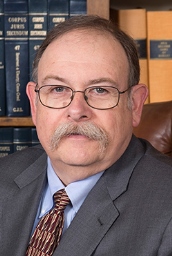
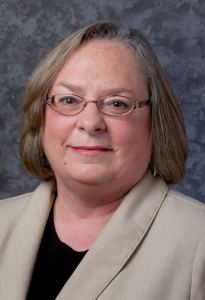
Rep. Pam Curtis

Opinion
Guest column

by Rep. Pam Curtis, D-32nd Dist.

The 2018 Kansas Legislative Session began on Monday, Jan. 8.

The Legislature has several major issues to address this year, and we are ready to get to work on finding commonsense, bipartisan solutions. Kansas works better when we work together. We look forward to strengthening the bipartisan coalition that enabled us to make positive changes last year, and building on that coalition to continue to work for the good of every Kansan.

2018 State of the State address

The annual State of the State Address was delivered by Gov. Brownback on Jan. 9. Over the last several months, Brownback had begun handing over his gubernatorial duties to Lt. Gov. Jeff Colyer, as he expected to be confirmed by the U.S. Senate for an ambassadorship.

Brownback was nominated for the ambassador position by Donald Trump last year. The U.S. Senate did not confirm the appointment, leaving confusion in Kansas over who is leading the state. Brownback then was re-nominated and his nomination moved through a Senate committee Jan. 18.

Brownback has stated that he will remain in Kansas in his current position until confirmed. Though Brownback delivered the State of the State – the administration remains in limbo as we head into the 2018 session.

In a surprise move, Brownback proposed in his address that $600 million be funneled to Kansas public schools over the next five years. This is a direct contradiction to the governor’s previous rhetoric and budgets. He has consistently pushed for spending cuts, not for more spending – his call for more school funding had led to public disagreement between the Governor and Republican legislative leadership.

Democratic response

This year, the Democratic response to the governor’s State of the State address was delivered by House Democratic Leader, Rep. Jim Ward. At the close of the address, both House and Senate Democratic caucuses gathered for a press conference, laying out their vision and priorities for the 2018 session.

These include sufficient and fair funding for all Kansas schools, fiscal responsibility, Medicaid expansion, job creation and training, restoring funding to core services, and building on the bipartisan coalition forged during the 2017 session to continue work on behalf of all Kansans.

The Democratic response to the State of the State address is at this site, https://www.facebook.com/kshousedems/videos/10156307457033646/.

School finance

In October 2017, the Kansas Supreme Court struck down the school finance bill passed during the 2017 session as unconstitutional, giving the legislature a deadline of April 30, 2018, to present a new formula that will satisfy the adequacy and equity portions of the Gannon case.

Some conservative Republicans in the legislature have opposed the court’s ruling, and will seek a constitutional amendment to restrict the court’s role in the matter of school finance. The Kansas Constitution directs that “the Legislature shall make suitable provision for finance of the educational interests of the state” in Article VI.

Every child in Kansas deserves access to a quality education, regardless of where they live. Democrats are ready to get to work immediately on crafting a formula that meets all of the court’s requirements and ensures our children are provided with every opportunity available.

Budget proposal

Gov. Brownback – who had previously handed the budget reins to Lt. Gov. Jeff Colyer in anticipation of his confirmation by the U.S. Senate – released his full budget proposal on Wednesday. Budget Director Sean Sullivan presented the proposal to the House Appropriations Committee. The proposal includes $35.5 million in new spending for fiscal year 2018 (FY18) and $290 million in new spending for FY19.

There is nothing in the proposal, however, to suggest how the governor would pay for the new spending. Sullivan said they are betting on revenue growth and the Legislature to come up with how to help pay for the additional spending. Sullivan’s “bottom line” budget document notes that sales tax revenues (in previous years stagnant) have grown 3.6 percent, and that corporate tax revenues (negative for the last several years) have grown 25 percent.

The budget proposal has seen heavy criticism from Brownback’s Republican allies in legislative leadership.

It is a special honor to serve as your state representative. I both value and need your input on the various issues facing state government. Please feel free to contact me with your comments and questions. My office address is Room 452-S, 300 SW 10th, Topeka, KS 66612. You can reach me at 785-296-7430 or call the legislative hotline at 1-800-432-3924 to leave a message for me. Additionally, you can email me at pam.curtis@house.ks.gov You can also follow the legislative session online at www.kslegislature.org.

My Legislative Facebook page is https://www.facebook.com/PamCurtisKCK/?ref=bookmarks, my Twitter account is https://twitter.com/pcurtiskck and my website is http://www.curtisforkck.com/.
Chamber takes stand on legislative issues

Views
Opinion column

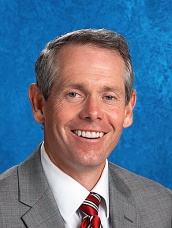
by Murrel Bland

The Legislative Committee of the Kansas City, Kansas, Area Chamber of Commerce approved its 2018 State and Federal Legislative Agenda when it met Friday, Jan. 12.

One of the federal issues that drew the most comment in previous Legislative Committee meetings concerned immigration reform. The committee’s recommendation states that a federal resolution should “compassionately address situations of individuals currently in the country.” The chamber opposes threatening the business licenses of employers who have unintentionally hired illegal workers.

The chamber supports an increase in funding for the National Institute of Health that will be used to find the cause, cures and prevention of diseases that affect many Wyandotte County residents and millions of Americans.

The chamber opposes federal and state mandates that would result in excessive utility rate increases.

Concerning state legislation, the chamber supports the following:

1. A reauthorization of STAR bond legislation. This allows state and local sales tax to be used to help finance major tourism projects such as the development of Village West.

2. Legislation that would streamline the process for local governments and neighborhood organizations to deal with abandoned buildings. State Rep. Stan Frownfelter (D-37th Dist.) has been a longtime sponsor and advocate for this legislation. State Sen. David Haley (D-Fourth Dist.) has opposed such legislation; he has said it could violate the rights of property owners. Those supporting the legislation explain it is not aimed “at Grandpa and Grandma who might have trouble paying their taxes, but rather the irresponsible, out-of-town deadbeat landlords.”

3. An origin-based sales tax for intrastate purchases so that it does not place an onerous burden on business.

4. Continued funding of the state transportation program, while opposing using such funds to balance the state general fund.

The chamber opposes a funding formula that would place an undue burden on local property taxes and mandated functions that do not include appropriate financial resources.

The Board of Directors of the chamber will consider these recommendations when it meets later this month.

Murrel Bland is the former editor of The Wyandotte West and The Piper Press. He is the executive director of Business West.

Guest column: Legislature has a duty to fund all state services adequately, including schools

Guest column
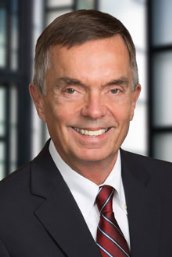
by Justin Henry, Alan L. Rupe and John S. Robb

Justin Henry

Alan L. Rupe

John S. Robb

Kansans deserve better.

In response to the Supreme Court’s decision in Gannon V, legislative leaders in both public and private meetings have been warning Kansans that complying with the decision would force other areas of the Kansas budget to suffer. This rhetoric is being spread in an attempt to scare Kansans, and to force support for an ill-advised attempt to alter the education article in the Kansas Constitution. This strategy is not new; legislative leaders have used this strategy before to try to avoid their constitutional duty. Kansans did not fall for it in 1993, 1995, 1997, 2004, 2005, 2006, 2007, 2009, 2011, 2013, and 2016. Kansans should not fall for it in 2018 either.

The legislature is charged with funding the government. All of it. But funding state government is not a zero-sum game. It is not “either fund this service or fund that service.” The legislative duty is to fund all necessary state services adequately. This includes hospitals, social services, highways, the courts, the corrections system, higher education, health and environment and … of course, public schools.

Attempting to pit these groups against each other in a scramble for the dollar is disingenuous. Amending the constitution to hurt public schools goes against values that Kansans have held dear for 160 years. Bending these values to meet current ideology is simply inappropriate… as it has been for the past 25 years. Declaring that no taxes shall be considered is an abdication of the legislature’s constitutional responsibility. Painting a picture that three prisons must close if we are to fund the schools is outrageous fear-mongering. Kansans demand better. All services, including public schools, need adequate funding.

Schools for Fair Funding is an association of 40 school districts that educate approximately 30 percent of all Kansas school children. No SFFF official is advocating for a reduction in state services designed to meet the needs of Kansas families, and no member of this group desires any state service to suffer. SFFF desires a strong safety net of services for Kansas families. When Kansas children wake up hungry, experience medical issues, or come from a foster care system that is broken, school officials see the harm caused first-hand. Students have to be ready to learn in order to achieve success. The Gannon case is about giving all children the opportunity to receive an education that meets constitutional standards, a task that would be even more difficult without a sound safety net of services for Kansas families.

Many legislators express an interest in ending the cycle of litigation, and yet they fail to acknowledge the Legislature’s historic role in the cycle. But for legislative foot dragging and intentional non-compliance, there would be no cycle. The Gannon case was filed in 2010, following the 2008-09 dramatic cuts to K- 12 education. The initial cuts included reneging on the third year of the school finance plan that settled the Montoy case in 2006. Since Gannon was filed, the state has lost at the trial court level twice, and at the Supreme Court five times. The only time in the past eight years the state has been successful in the Gannon case was in June of 2016, when the Legislature worked directly with the plaintiffs to fix the equity issues, and the Supreme Court agreed that the changes made complied with constitutional equity requirements. Sadly, in the very next legislative session, the Legislature then adopted new legislation that destroyed the equity of the previous system and introduced new inequitable provisions.

This, of course, resulted in another defeat before the Supreme Court, in Gannon V. None of this was a surprise to informed observers. It was all very predictable.

Moving forward, the best way for the Legislature to end the cycle of litigation is to quit passing unconstitutional legislation and to focus on funding our schools in compliance with Gannon V. Stop trying to “game” the court. It has not worked thus far and won’t work now. No one is more tired of litigation than school officials.

Currently, over 25 percent of Kansas school children are under-performing on state assessments. The state of Kansas has produced studies that prove the current levels of funding will not provide all children with a constitutional level of education. Again, these are the state’s own studies, not something concocted by plaintiffs or the schools. The Kansas Supreme Court has been extremely patient, but we believe the Gannon V court is telling the Legislature and Governor that this is their last chance to “get it right.” We stand ready to work with public policy leaders and advocates to make the transition to compliance as smoothly as possible. Kansans should expect nothing less.

Justin Henry
Superintendent USD No. 265
President, Schools For Fair Funding
Alan L. Rupe
John S. Robb

Counsel for Schools For Fair Funding