Guest column
Opinion
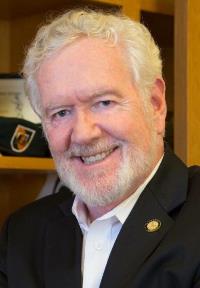
by Sen. Steve Fitzgerald, R-5th Dist.
The Senate is trying to be more transparent. Besides this newsletter, here are some other tools.
Website: www.kslegislature.org.
Great for looking up bills, calendars, journals, as well as the roster in each chamber.
YouTube of Legislature: http://bit.ly/2CZj9O0
The YouTube page has an archive of the sessions thus far – including the State of the State and the State of the Judiciary.
Committee streaming: http://sg001-harmony.sliq.net/00287/Harmony/en/View/Calendar/
The Kansas Legislature is also streaming committees, with every committee room equipped with audio streaming technology.
Quick facts
• The Kansas economy grew 2.1 percent in the third quarter of 2017, missing the expectation of 2.8 percent growth (BEA).
• Since December 2016, Kansas gained 6,300 seasonally adjusted total nonfarm jobs and 8,000 private sector jobs (Kansas Department of Labor)
• Legislative post audit reveals misallocated $400 million. A Legislative Post Audit study revealed a possible misallocation of $405 million to schools in transportation funding in violation of state law, which prompted a letter from legislative leaders and potential involvement by the Kansas Attorney General. (Source: http://www.cjonline.com/news/20180125/kansas-attorney-general-gop-legislators-open-to-criminal-investigation-of-k-12-funding-abuse)
• Kansas Joins in School Choice Week. This week is School Choice week and Kansas joined in the festivities, with over 281 events throughout Kansas to “raise awareness about opportunity in education and spark conversations about what options are available – and what options parents want.” A School Choice Rally was held in the State Capitol on Wednesday. (Source: https://wwwbusinesswire.com/news/home/20180124005027/en/Governor-Brownback-Proclaims-Jan.-21-27-%E2%80%9CKansas-School)
• Unemployment is down again in Kansas. In December, unemployment in Kansas went down another tick to 3.4 percent. One year ago, the rate was 4.3 percent. Kansas gained 5,000 jobs in the last two months. (Source: http://www.gctelegram.com/news/20180119/kansas-gains-jobs-in-december)
• Editorial: Pro-dependency advocates miss the mark in attacking Kansas welfare reform
http://thehill.com/opinion/healthcare/370687-pro-dependency-advocates-miss-the-mark-in-attacking-kansas-welfare-reform
Jonathan Ingram, vice president of research at the Foundation for Government Accountability, wrote the above piece regarding welfare reform in Kansas. Here is a key excerpt:
“The Kansas results show a clear trend: higher earnings and less dependency after leaving welfare. In fact, higher earnings more than offset lost welfare benefits, leaving these families financially better off. While there remains more work to be done to ensure as many families as possible move back onto the path of self-sufficiency through employment, Kansas has made incredible progress in just a few short years.”
Gov. Brownback finally confirmed
Lt. Gov. Jeff Colyer to be sworn In Jan. 31
After many months of delay by Democrats in the U.S. Senate, Gov. Brownback was confirmed on Wednesday as the U.S. Ambassador-at-Large for International Religious Freedom.
He was confirmed on a 50-49 vote, with Vice President Mike Pence breaking the tie. Gov. Brownback will officially resign on Wednesday, Jan. 31, at 3 p.m. At that time, Lt. Gov. Jeff Colyer will be sworn in as the 47th governor of Kansas.
Rally for Life
It was cold and wet, but that did not stop hundreds of pro-life Kansans from braving the weather and participating in the March for Life and Rally for Life this past Monday afternoon, which marked the 45th anniversary of Roe vs. Wade.
Many elected officials, including many members of the Kansas Truth Caucus, were present for the rally to support the cause of life.
The march began at the Topeka Performing Arts Center and ended with a rally on the statehouse steps where marchers heard from speakers such as Gov. Sam Brownback, Kansans for Life executive director, Mary Kay Culp, and abortion survivor Melissa Ohden.
“Now, I didn’t do this. You did this. The legislators did this,” Brownback said. “But here’s the actual number – 17,000 fewer abortions over the prior six years than the six years before that. You’ve made a difference. We have 17,000 fewer abortions in Kansas because of what you have done. Keep doing it. This is important.”
During the past seven years, Kansas has taken remarkable steps and has transitioned to become one of the most pro-life states in the country. Thanks to the efforts of a pro-life governor, pro-life legislature, and allies at Kansans for Life, Kansas is leading the way in protecting the innocent among us.
That historic progress is now under threat by the Kansas Supreme Court and the possibility of overturning the ban on dismemberment abortions, a second-trimester abortion procedure. The ban on dismemberment abortions was a first-in-the-nation law signed by Gov. Brownback in 2015.
2018 Kansas Teacher of the Year
On Tuesday, the Senate adopted a resolution congratulating and commending the regional finalists of the 2018 Kansas Teacher of the Year selections. Among the finalists welcomed to the Senate chambers was high school English language arts teacher from Buhler Unified School District 313, Samantha “Sam” Neill. With more than 100 candidates nominated, Neill was selected as the 2018 Teacher of the Year.
Each district is eligible to nominate one elementary-school educator and one secondary-school educator. Within the field of more than 100 nominations this year, eight regional finalists were chosen. The Kansas Teacher of the Year Award recognizes the demonstration of excellent teaching in the elementary and secondary classrooms of the state. The recognized teachers are leaders in the development of schools, student performance, and the teaching profession.
Also welcomed to the Senate chambers were seven other regional finalists: Jennifer L. Donovan, De Soto USD 232; Jamie D. Manhart, Silver Lake USD 372; Megan E. Nagel, Newton USD 373; Angela “Angie” R. Powers, Olathe USD 233; Gilbert “Gil” R. Still, Jr., Dodge City USD 443; Sarah C. VenJohn, Winfield USD 465; and Bradley “Brad” W. Weaver, Atchison USD 409
Transparency bill
Senate President Wagle, R-Wichita, offered a proposal last Friday aimed at bringing more transparency to state contracts.
Sen. Wagle’s bill would require lobbyist registration to anyone attempting to influence officials in the governor’s office over a state contract. Currently, state law only requires the registration to anyone lobbying legislators.
Lansing Correctional Facility
On Wednesday the State Finance Council approved the 2-year, $363 million contract for the construction of a new Lansing prison. State finance members voted 6-3 for the project.
Those in favor of the contract were Gov. Brownback, Senate President Susan Wagle, House Speaker Ron Ryckman, Senate Majority Leader Jim Denning, House Majority Leader Don Hineman, and House Budget Chairman Troy Waymaster. Voting against the deal were Senate Minority Leader Anthony Hensley, House Minority Leader Jim Ward, and Senate Budget Chairwoman Carolyn McGinn.
Sen. Denning was influential in adding language to the contract that would discourage privatization. He promised a bill to be introduced sometime this legislative session to prohibit privatization operations at any state prison in Kansas.
The vote was originally scheduled for Jan. 4 but was delayed to allow legislators time to gather more information on the plan. Under the approved plan developed by KDOC and CoreCivic, the new facility will have 1,920 maximum and minimum-security beds and 512 medium security beds. Technology and design upgrades will allow for KDOC to reduce staffing from 682 to 371.
KanCare 2.0
Gov. Brownback’s administration announced this week that they would halt their plan to move forward with KanCare 2.0.
Brownback and Colyer explained this week that they want to address the concerns raised by legislators in regards to increased costs and the state’s ability to absorb those costs in future budgets. The administration plans to work with the Kansas legislature to determine the best path forward with KanCare.
Legislators hear from leaders on mental-behavioral health
On Monday evening, legislators heard from hospital representatives, district attorneys, county sheriffs, and leaders from community health centers about the growing mental health crisis in Kansas. A brief background was explained on how both the state and federal governments have cut funding to mental health over the past 60 years. This has resulted in Kansas emergency rooms and local jails being filled with people needing treatment.
A few goals were outlined to address this growing issue. One goal was to change Medicaid policy to allow recipients of KanCare who are incarcerated to have their Medicaid eligibility suspended rather than terminated. This would provide a safety net for treatment to people who are continuously arrested and would also help alleviate some costs that the hospitals are absorbing.
– SB195 addresses this goal.
– SB195 was heard this week in the Senate Public Health and Welfare Committee and is expected to be passed out on Tuesday. There were no opponents to changing the policy.
Another recommendation was to look at the needs of the state on a regional basis and to begin the creation of regional acute behavior health facilities. Acute care facilities would provide care for patients needing care for less than two weeks.
Last, it was acknowledged that the state needs a long-term care facility. It was expressed that Osawatomie Hospital is not meeting the long-term and acute care needs of behavior health for patients needing more than two-weeks of care. Advocates hope with more funding and attention to mental health, Kansans can get the care they need to live stable and productive lives.
Dental care expansion
On Tuesday, Senator Vicki Schmidt, R-Topeka, proposed a bill to expand dental care in Kansas. This legislation would allow the creation of dental therapists working under the direct supervision of licensed dentists.
The dental therapists are licensed dental hygienists required to complete additional training in an accredited course of study. Once dental therapists complete the required 500 hours of training they would then be allowed to perform an additional 35 dental procedures.
Misallocated education funds spur calls for investigation
The big news late in the past week was the news that the revelation, via a Legislative Post Audit report, that said the Department of Education may have violated state law by exceeding its authority by improperly allocating $405 million in transportation funds over for over 30 years. That prompted a letter from legislative leaders in both chambers to Jim Porter, chairman of the Kansas State Board of Education, asking for an independent forensic audit.
A report in the Garden City Telegram indicated that the Kansas Attorney General believes the matter warranted further investigation by law enforcement. As of now, the Attorney General’s office has stated it supports a deeper independent audit and is monitoring the situation, but has not yet opened an investigation.
Only legislators are constitutionally responsible as appropriators of the peoples’ money-not staff members and not judges.
There needs to be an independent, forensic to determine what happened and why. That process should be free of politics, with a focus on the rule of law as determined by Kansas statutes. Such and audit will help to fix blame appropriately and exonerate the innocent that are now under suspicion.
However, the real issue is the complexity of the school finance formula, which created an environment for to occur. No transparency with no internal audits left the door wide open to mistakes and possible corruption.
“In the end, these are taxpayer dollars and the public deserves no less than a complete accounting of what happened and why, and assurances that errors like these will not happen in the future.
“Misuses such as these call into question the rationale for higher taxes when literally hundreds of millions in tax dollars have potentially been misappropriated in direct violation of legislative intent.”
Burdensome regulation behind historic meat market’s decision to close
http://www.kansas.com/news/state/article195937329.html?linkId=47370980
According to the Wichita Eagle, a one-of-a-kind Kansas meat market – Brant’s Meat Market – is closing after 96 years. One of the reasons? Crippling federal regulations and a 22-page compliance form delivered by a state meat inspector.
See this excerpt:
“Stephanie Svaty said the decision to close the store came recently, largely because of federal regulations now being enforced.
“The store was not cited for any violation, Svaty said. A state meat inspector visited the store on Jan. 10 and reported that it needed to keep more documentation and paperwork in the future.
“It is just mainly the paperwork they brought in and told us we needed to start following,” Svaty said. “They gave us a 22-page document, which would be fine if we had 10 to 15 employees, we could understand. It wasn’t feasible hiring an extra person to keep track and check things. We have always had inspections, everything has always been checked and been fine. Maybe if they would have given it to us in chunks, it might not have been so overwhelming.
“We don’t freeze any of our meat, it is made fresh,” she said “We’ve done this 96 years and to our knowledge we did not have anybody die from it or were hospitalized because of our products.”
“But my dad, he is 72 years old. This burst his bubble. The fire left him when he got that 22-page document and read it from front to back and made notes in the margins. We made our decision just this past week.”
As Svaty indicated, burdensome regulations – and complicated and expensive means to comply with those regulations – impact small businesses more than any other. They are part of a regulatory environment created by federal, state, and sometimes local regulations. If a business can’t stay open due to the costs of compliance, there is a problem.
This was highlighted in a quote from the article by Marci Penner, director of the Kansas Sampler Foundation:
“If anybody gets involved, it won’t be to save Brant’s but to address a bigger problem with legislation being oppressive to many small businesses,” she said. “Maybe the sadness of Brant’s will lead to some effort to change things so other small businesses may not have to struggle as hard.”
Speaking of compliance costs, the National Federation of Independent Business (NFIB) – Kansas this week raised concerns with legislation that would give the Kansas Director of Revenue subpoena power, potentially increasing legal and compliance costs for small businesses.
From Dan Murray, NFIB-Kansas State director:
“Tax and legal compliance costs are a major problem for small business owners who rarely have in-house professional staff to meet the demands of government regulations,” Murray says. “Further, tax compliance costs are 67% higher for small businesses than for big businesses.
“Compliance costs small business owners $18-$19 billion per year. Paperwork costs come to $74.24 per hour. The last thing small business needs is for the Department of Revenue to have another intimidating, costly compliance mechanism.”
School Choice Week
Jan. 21-27 was National School Choice Week and that included activities right here in Kansas. The main activities took place on Wednesday for “School Choice Day,” which included a rally inside the Capitol where many families who had been positive impacted by school choice were present.
In fact, there were 281 events throughout Kansas to “raise awareness about opportunity in education and spark conversations about what options are available – and what options parents want.”
The cause of school choice is not going away, no matter how many in government try to act like it doesn’t exist. From state to state, it has been proven to work. Examples of success:
The Kansas Legislature enacted the Kansas Tax Credit for Low Income Students Scholarship program in 2014. According to EdChoice, there are 292 students currently enrolled in the program, but up to 7 percent of Kansas students are eligible. You can learn more about the program by clicking here.
Many students across the country, including here in Kansas, are trapped in schools where they are underperforming. In fact, it is in the very Gannon case ping-ponging between the Kansas Legislature and the Kansas Supreme Court that the core issue is the 25 percent of kids in Kansas who are not performing up to standards.
Members of the Kansas Truth Caucus believe parents have a right to other options, whether that is another public school, private or parochial schools, or homeschooling. A child-focused, rather than system-focused, model of education would foremost care that the child receives a first-class education that prepares them for life, not which system produced it.
This week
Tuesday
Final action on: SB 263, creating a program to research the use of industrial hemp – [Senate Agriculture and Natural Resources Committee; Jan. 30 at 8:30 a.m.]
Final action on: SB 195, creating a suspended eligibility status for recipients of state Medicaid – [Senate Public Health and Welfare Committee; Jan. 30 at 9:30 a.m.]
Hearing on: SB 323, termination of retail electric service territory within city boundaries – [Senate Utilities Committee; Jan. 30 at 1:30 p.m.]
Wednesday
Presentation on: Western Kansas Rural Economic Development Alliance Program Impacts by Christy Hopkins – [Senate Commerce Committee; January 31 at 8:30 am]
Thursday
Presentation on: Evaluating the Statewide Impact of Economic Development Programs by Ken Kriz, Wichita State University – [Senate Commerce Committee; Feb. 1 at 8:30 a.m.]
Hearing on: SB 312, licensure of dental therapists – [Senate Public Health and Welfare Committee; Feb. 1 at 9:30 a.m.]
Hearing on: SB 204, Enacting the Kansas cybersecurity act – [Senate Ways and Means Committee; Feb. 1 at 10:30 a.m.]
2018 session dates and deadlines
Please be aware of the following dates and deadlines for the 2018 legislative session. As always, each is subject to modification and leadership will keep you updated on any changes which might occur.
Monday, Jan. 29, Last day for members to request bill drafts
Monday, Feb. 5, Last day for non-exempt committees to request bill drafts
Wednesday, Feb. 7, Last day for bill introductions by members
Friday, Feb. 9, Last day for non-exempt committee bill introduction
Friday, Feb. 16, Pro forma
Monday, Feb. 19, Last day for AM/PM committees to meet
Tuesday, Feb. 20, On floor all day
Wednesday, Feb. 21, On floor all day
Thursday, Feb. 22, Last day for non-exempt bills in house of origin
Feb. 23-27, No session
Friday, March 2, Pro forma
Friday, March 23, Last day for non-exempt committee consideration
March 26-28, On floor all day
Thursday, March 29, On floor all day; Last day to consider non-exempt bills not in originating chamber
Friday, March 30, No session
Friday, April 6, Drop dead day; first adjournment
Thursday, April 26, Veto session begins
Thursday, May 4, Day 90
Sen. Steve Fitzgerald, R-5th Dist., represents western Wyandotte County and part of Leavenworth County.