
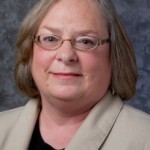
Legislative update from Rep. Pam Curtis, D-32nd Dist.

Rep. Pam Curtis

by Rep. Pam Curtis

It was a busy week at the Capitol as the Kansas Legislature completed week two of the 2019 session. It is wonderful to see so many visitors from home attending events at the Statehouse and engaged in the legislative process.


We have great help in our office at the Statehouse this session. Brian Truesdell has joined me and Rep. Jerry Stogsdill as our office assistant and Jordyn Lawrence, a student at KU, as my legislative intern. It is indeed a pleasure to have both Brian and Jordyn working with me this session.


On last Tuesday, the Wyandotte County-Leavenworth County Delegation met with representatives from the Board of Public Utilities for an update on the utility and discussion of matters before the Kansas Legislature. KCK BPU President Norm Scott, General Manager Don Gray, and Chief Communications Officer David Mehlhaff attended the Tuesday luncheon.

We appreciate them taking the time to travel to Topeka and meet with members of the delegation.


It is a special honor to serve as your state representative. I value and appreciate your input on issues facing state government. Please feel free to contact me with your comments and questions. My office address at the Statehouse is: Room 452-S, 300 SW 10th, Topeka, KS 66612. You can reach me at 785-296-7430 or call the legislative hotline at 1-800-432-3924 to leave a message for me. You can also email me at: pam.curtis@house.ks.gov.


First vote of the 2019 session

The first vote of the 2019 Session was on the House Rules (HR 6004), which passed 104-15. There were a few provisions added to increase transparency. House Democrats have been striving to increase transparency for years, continuing with the passage of HR 6004. It is imperative that the citizens of our state are informed and included in the decisions and issues that impact them. House Democrats are committed to full transparency and will continue work to ensure accountability within the legislature. The addition to the biennial House Rules makes it easier for the public to find the name of an individual or organization requesting a bill, and easier to track bills and amendments.

In addition to covering procedural rules for the chamber, an amendment offered by Rep. Ponka-We Victors, to allow lawmakers to breastfeed on the House floor, was approved on a voice vote. House Democrats championed and supported the provision, encouraging a more pro-family work environment.

Joint rules adoption

On Thursday, Jan. 24, the House voted to adopt joint Senate and House rules by passing SCR 1603. The joint rules apply to both chambers for the biennium. There were no changes made to the joint rules from the last biennium.

Education

On Thursday, Jan. 24, Gov. Laura Kelly signed an executive order creating an advisory group that aims to improve education in Kansas.

The Governor’s Council on Education will look for ways to enhance early childhood education, create relationships between the education and business communities, and develop partnerships to address workforce needs in Kansas.

Gov. Kelly explained that improving education means not only fully funding public schools, but also searching for ways to evaluate and innovate from early childhood all the way through the workforce. There are several members from Kansas City, Kansas, serving on the Council including: Co-chair Dr. Cynthia Lane, Joe Reardon, Irene Caudillo, Cathy Harding, Monica Crowe and Marcella Clay.


Resources

My Legislative Facebook page, https://www.facebook.com/PamCurtisKCK.
My Twitter account, https://twitter.com/pcurtiskck
My website, https://www.curtisforkck.com/
Kansas Legislature website, http://kslegislature.org/
Republican maneuvers will test Kelly’s savvy as new governor

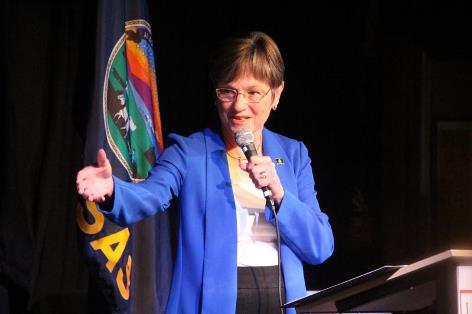
Kansas Gov. Laura Kelly (File photo from Kansas News Service)

Analysis

by Jim McLean, Kansas News Service

Lawmakers, lobbyists and citizens following the goings on in Topeka should buckle their seat belts.

The 2019 legislative session is going to be a bumpy ride.

It looks like an obstacle course of sorts that will test the political skills, patience and resolve of new Democratic Gov. Laura Kelly.

Republican legislative leaders appear determined to put Kelly to the test right out of the gate. They want to quickly restore state income tax deductions eliminated by recent changes in federal tax law.

In her State of the State speech, Kelly pointedly asked lawmakers not to propose any major tax changes. She wants them to hold off until she — and they — get a better handle on the state’s revenue outlook.

Waiting, GOP leaders said, would deny money that rightfully belongs to Kansas taxpayers. It would be tantamount to a $60 million tax increase. So, Republicans are charging ahead. That sets up an early confrontation with the governor.

To Republicans, that might seem like a win-win scenario. If Kelly signs the bill, great. They can take credit for cutting taxes.

If she vetoes it, also great. They can say, “Look, it’s only been a few weeks and she’s already broken her campaign promise not to raise taxes.”

A short-term political win, but one that could backfire in the long run.

Here’s why.

Kelly won the governor’s race for a reason. Exit polls clearly show that voters preferred her to Republican Kris Kobach because they saw her as someone who was less partisan. She appeared as someone who could deliver on her promise to work across the aisle to fix the damage that they agreed had been done by former Republican Gov. Sam Brownback’s tax cuts.

More than 75 percent of voters polled said the tax cuts were “a bad thing” for the state.

Based on those results, voters might agree with Kelly’s cautious approach. They might agree that cutting taxes again now could hinder the recovery from the Brownback years. That’s a recovery that, Kelly contends, requires responding to urgent needs while maintaining healthy balances in the state’s checking account.

To be sure, the tax-relief ideas Republicans are proposing now aren’t really comparable to the Brownback tax cuts. They’re much smaller.

But their $60 million to $100 million annual price tag would preclude spending on other things that Kelly, at least, views as higher priorities.

Kelly’s performance in the districts of Republican legislative leaders might also be instructive to Republican leaders as they plot a path forward.

Kelly won Senate President Susan Wagle’s Wichita district by 14 points. Her margin in Senate Majority Leader Jim Denning’s Johnson County district was a whopping 20 points.

There is another benefit to Kelly drawing a line in the sand. Relevance.

Vetoing the tax-relief bill while inviting lawmakers to revisit the issue later in the session would give her a bargaining chip. That’s important leverage to use when negotiating with Republican leaders on the issues at the top of her priority list: Medicaid expansion, funding schools and fixing a foster care system that isn’t adequately protecting vulnerable children.

All of this suggests that the biggest issues of the session won’t be resolved until the very end when the governor and Republican leaders strike some sort of grand bargain.

Jim McLean is the senior correspondent for the Kansas News Service, a collaboration of KCUR, Kansas Public Radio, KMUW and High Plains Public Radio covering health, education and politics. You can reach him on Twitter @jmcleanks.
Kansas News Service stories and photos may be republished at no cost with proper attribution and a link to ksnewsservice.org.

See more at https://www.kcur.org/post/jim-mclean-republican-maneuvers-will-test-kellys-savvy-new-governor-kansas

Column: It’s time for Kansas to pass Medicaid expansion

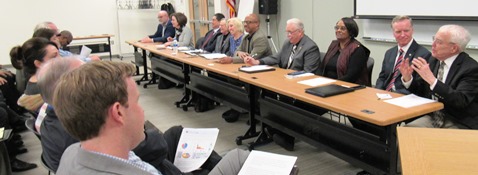
State legislators from Wyandotte County discussed several issues, including Medicaid expansion, at a recent legislative forum at the South Branch Library, Kansas City, Kansas. Former Rep. Bill Reardon, right, was the moderator. (Staff photo)

Window on the West
Opinion column

by Mary Rupert

It’s no wonder that Medicaid expansion was on the minds of many people at a recent legislative forum in Wyandotte County.

Expanding Medicaid, sometimes called KanCare, here would benefit Wyandotte County because the county has an estimated 19 percent uninsured rate, compared to an estimated 12 percent uninsured rate in Kansas. The cost of caring for the uninsured is passed on to the hospitals and to the local communities. When state legislators vote against expanding Medicaid, instead of the federal government paying for the medical costs of the uninsured, the local communities pay for it, and there are also related costs to the state taxpayers.

Medicaid expansion received a lot of support at the Jan. 7 Wyandotte County legislative forum held at the South Branch Library, 3104 Strong Ave., Kansas City, Kansas, with about 85 people attending. It was one of many topics discussed.

“The ability to expand KanCare is a game-changer for our Kansas residents,” said Dr. Todd Jordan, president and CEO of the United Way of Wyandotte County.

Among others supporting Medicaid expansion were the Unified Government, El Centro and Unity with a Purpose.

While the expansion of Medicaid has support in Wyandotte County, including the local government and residents, and it has support from residents in Kansas as well as Gov. Laura Kelly, it could be blocked in the Legislature by lawmakers from other areas. In a former session, it was approved, but vetoed by a previous governor.

What’s holding it up now?

State Rep. Kathy Wolfe Moore, D-36th Dist., said that passing Medicaid expansion could be both easier and more difficult this year. That’s because the governor is now behind it, but some House members in other areas were defeated this year, and Medicaid expansion supporters were not sure if the new members supported it.

Sometimes hospitals in Kansas are faced with uninsured residents showing up in the emergency room from opioid overdoses, methamphetamine abuse, or illnesses, according to Rep. Wolfe Moore. She pointed out it would be far less expensive for the hospitals, some of which are publicly funded, if more residents qualified for Medicaid coverage and were treated at their primary care doctor’s office or a clinic rather than showing up at the emergency room, where medical care is much more expensive.

Already two hospitals in Kansas have closed in recent years, largely attributed to the costs of providing care for uninsured patients.

Sen. David Haley, D-4th Dist., said that with state revenues up this year, this is the time to provide health insurance to an estimated 150,000 Kansans who would benefit. It would help the state, as well as the individuals, and would provide a boost to the economy. With Medicaid expansion, the state would receive an influx of federal funds that are now being spent in other states. Sen. Haley said he hoped Kansas could capitalize on this opportunity.

Sen. Pat Pettey, D-6th Dist., the Senate minority whip this year, said in order for Medicaid expansion to pass, more legislators would have to see it as a money-saver. Currently, some legislators think it would be costly for the state. Without Medicaid expansion, Sen. Pettey said that many persons would not be provided services such as mental health care. If more residents’ mental health care was covered by Medicaid expansion, it could result in keeping more people out of prisons, saving the state additional money, she said.

Rep. Wolfe Moore, the ranking minority member of the House Appropriations Committee and a member of the governor’s Medicaid expansion group, said that Medicaid expansion would be a positive for the state budget, plus it would help hospitals. For example, the University of Kansas Health Systems in Kansas City, Kansas, is facing a possible $50 million in uncompensated care costs. Medicaid expansion also could allow community mental health centers to help more people, she added.

Rep. Pam Curtis, D-32nd Dist., is a supporter of Medicaid expansion.

“I think there’s really a chance this year,” Rep. Curtis said. “We passed it before. But until the votes are in (this year), I don’t really know.”

If residents want Medicaid expansion, they are going to have to speak up. Residents may send messages about their positions on Medicaid expansion to their state legislators:

• Sen. Kevin Braun, R-5th Dist., 785-296-7357, email Kevin.Braun@senate.ks.gov.
• Sen. David Haley, D-4th Dist., ranking minority member, Ethics, Elections and Local Government, phone, 785-296-7376, email David.Haley@senate.ks.gov.
• Sen. Pat Pettey, D-6th Dist., Senate minority whip, ranking minority member, Transportation Committee, 785-296-7375, email Pat.Pettey@senate.ks.gov.
• Rep. Tom Burroughs, D-33rd Dist., ranking minority member, General Government Budget Committee, D-33rd Dist., phone 785-296-8153, email tom.burroughs@house.ks.gov.
• Rep. Pam Curtis, D-32nd Dist., ranking minority member, Local Government Committee, phone 785-296-7430, email pam.curtis@house.ks.gov.
• Rep. Stan Frownfelter, D-37th Dist., ranking minority member, Commerce, Labor and Economic Development Committee, phone 785-296-7300, email stan.frownfelter@house.ks.gov.
• Rep. Broderick Henderson, D-35th Dist., Health and Human Services Committee, phone, 785-296-7697, email broderick.henderson@house.ks.gov.
• Rep. Louis Ruiz, D-31st Dist., ranking minority member, Federal and State Affairs Committee, phone, 785-296-7885, email louis.ruiz@house.ks.gov.
• Rep. Kathy Wolfe Moore, D-36th Dist., ranking minority member, Appropriations Committee, phone 785-296-0424, email kathy.wolfemoore@house.ks.gov.
• Rep. Val Winn, D-34th Dist., House assistant minority leader and ranking minority member of the K-12 Education Budget and the Interstate Cooperation committees, phone 785-296-7630, email valdenia.winn@house.ks.gov.

Phone numbers and email addresses for other state legislators are online at www.kslegislature.org.

To reach Mary Rupert, editor, email maryr@g3f.1db.myftpupload.com.