
Downtown KCK YMCA receives more funding

The Unified Government Commission unanimously voted Thursday to give $75,000 to the Downtown 8th Street YMCA in Kansas City, Kan.

The UG is providing the funding to keep the Y open during the next 12 months while funds are being raised for a new downtown YMCA building as part of a Healthy Campus. A year ago, the UG made an agreement to fund the Y temporarily to keep it open.

According to the new agreement, the Y will continue operations and building upkeep at a cost of $6,250 per month, which is $3,750 less per month than the current agreement.

The $75,000 will come from the casino grant that is in the 2014 budget as part of the Consolidated Parks Fund and is not currently allocated for any specific expense for 2014, according to UG information.

When asked by UG commissioners, YMCA officials said on Thursday there were now 663 YMCA members at that location, which are households representing a little more than 5,000 people who use the facility.

At Thursday’s meeting, Commissioner Hal Walker said that this will be the last time he votes to approve any money for this YMCA.  He said he didn’t like the way the Y announced its closing last year, pulling out and then being kept open with public dollars.

“At some point the public needs to stop paying for the benefits to a few,” Walker said.

Commissioner Tarence Maddox asked if there were any programs free to the public and was told there is a nutrition and weight program that is free to the community, and also free soccer youth events on four Saturdays in April and May.

Maddox said the UG needs to receive something in return for its funding and asked about the possibility of using the Y building for UG services when a new Y is built.

Maddox also said he would like to see more UG money spent on UG parks and recreation facilities, which may need repairs.

While she supported the Y’s request, Commissioner Ann Murguia said the UG’s money should be linked to UG goals, and she asked if research supported the idea that health improves when people have access to a facility. She said they should be able to demonstrate to the public whether the goal was met – whether health rankings improved or whether people were healthier.

She also said the commission needs to be strategic about its tax dollars, and these requests should be handled during the budget, not outside the budget. She added she could become more of a cheerleader for the project if there were measurable goals to connect to it.
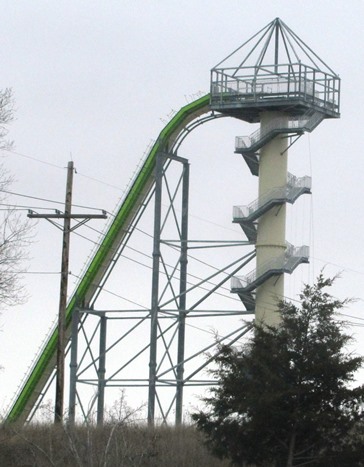
World’s tallest water slide


Touted as the world’s tallest water slide, Schlitterbahn’s new Verruckt slide in Kansas City, Kan., will be measured today for the Guinness World Records. Expected to be present for this event are a judge from the Guinness World Records, Gov. Sam Brownback, Mayor Mark Holland and Schlitterbahn officials. The exact height of the new slide is expected to be revealed during the event.


UG examines overtime pay

The Unified Government Commission tonight went into overtime to discuss public safety overtime pay and out-of-class pay.

The special meeting started at 5 p.m. and went over the two-hour time slot, and resumed later after the regular 7 p.m. meeting.

Mayor Mark Holland said that costs were up significantly because of overtime and out-of-class pay.

Costs were up by millions in overtime and out-of-class pay for three public safety departments, the Police Department, Fire Department and Sheriff’s Department, he said. There was also an increase of personnel.

“We have a major fund balance crisis right now,” he said. “We are at risk of losing our credit rating if we do not find a way to curb some spending.”

He said his goal is to do a comprehensive third-party look at all three of these departments, as well as a compensation classification analysis, to make sure the UG is functioning as efficiently as possible while delivering the same services and not compromising safety.

That $5 million spent on overtime and out-of-class pay to some employees in the three departments is enough to give a 3 percent cost-of-living adjustment to each UG employee, he added.

Sheriff Don Ash, Fire Chief John Paul Jones and Assistant Police Chief Terry Terry Zeigler appeared before the commission to explain what is driving the overtime costs. They described staffing shortages in their departments, with employees being asked to cover vacancies or unscheduled leaves such as illnesses and family emergencies. They described their departments’ situations in detail.

The department heads told the commission that they were bound by contractual agreements on the issues of overtime and out-of-class pay.

Chief Jones told the commission there were currently 14 vacancies in his department and it will probably go up to 25 later in the year with retirements. The new recruit class will not be available until the end of the year, he said. The Fire Department is currently a little below national standards recommending 4 persons per truck, he told the commission. As the situation is now, he said to eliminate overtime would be a cut in service.

The commission threw out the idea of reducing the number of fire station in the city, and the mayor discussed assigning three to a truck and having a fourth arrive at a scene from another fire station.

Sheriff Ash, whose department had more than a million dollars of overtime, presented three options to the commission, including one that would save more than a half-million dollars.

He told the commission that if he could add employees, he could reduce the amount spent on overtime and out-of-class pay. Commissioner Ann Murguia asked about the possibility of adding a few part-time deputies.

Assistant Chief Terry Zeigler said late and extended calls were driving overtime in the Police Department, with officers staying on the scene to complete their work.

He said contract language had driven the staffing costs. In 2012, the department spent more than $500,000 on overtime because of contract language, he said. In 2014 a letter of understanding was signed by the Fraternal Order of Police and the Police Department that addressed the issues and the amount spent on overtime is not as much currently. About $254,000 is projected for overtime this year. Commissioner Mike Kane suggested the other departments might want to work together with the unions on contract language to reduce overtime.

The commission also discussed trying to reduce overtime associated with officers having to attend court.