With Election Day on Tuesday, Nov. 3, efforts are continuing to get out the vote in Wyandotte County.
Jacques Barber, chairman of the Wyandotte County Democratic Central Committee, is encouraging people who still have mail-in ballots at home to drop them off in election drop boxes, take them to the Election Office or take them to the polls on Election Day.
He said rides are available to the polls on Election Day, and rides also are available to take mail-in ballots to drop boxes.
Last Thursday, Wyandotte County election officials stated that almost 30,000 people here had already voted through mail ballots and advance in-person voting.
Barber said voter turnout they’re seeing so far is good, and better than in prior elections.
He’s happy to see that and would like to see even more response, he said. It’s a constant challenge that there are people who are eligible to vote who don’t vote, he said.
“My goal is to try to reach as many of those folks as we can to find out the reasons why they don’t vote, and help them to understand why it is important, and the fact that their votes really do matter, and that nothing will change by not voting,” he said.
Voters in general have been very motivated this year. Some people have told him they’ve never voted before, but they felt like they had to this time, he said.
He has seen some polls, but doesn’t want to take anything for granted, he said.
“I don’t want to be complacent,” Barber said. “It’s not over ‘til it’s over.”
There was an extremely high return rate on mail-in ballots in the primary election, he said, which is an encouraging indication of the commitment of people to vote, who do vote by mail.
They have been encouraging people to vote by mail this year, he said, as an easy and safe way to vote.
“That was a big push for us, particularly in the era of COVID,” he said.
Now that there are only a few days left until Election Day, he’s encouraging people who still have mail-in ballots at home to fill them out, take them to drop boxes, the Election Office or to their polling places on Election Day, to make sure they get there on time.
Under state law, mail-in ballots can be postmarked by 7 p.m. Tuesday, Nov. 3, and must be received by the Election Office by Friday, but at this time Barber is encouraging voters to drop the ballots off to the drop boxes. They don’t want to take any chances with the mail ballots not getting there by Friday.
“We really believe it’s too late to try to mail it,” Barber said. “We do encourage them and strongly suggest, if there’s a way to get it dropped off, they can drop it off in one of the drop boxes around the county, and can take it to one of the early voting sites and drop it off there. On Tuesday, they can drop it off in person at the Election Office.”
There are two ballot drop boxes at the Election Office and four others around the county to drop them off, he said. The advance mail ballots also can be dropped off at regular polling places on Election Day, during hours the polls are open.
“We have also given people rides to the polls,” Barber said. “Some were disabled and not able to drive. We were happy to arrange rides for them.”
They also have been doing aggressive phone banks and other activities to get out the vote, he said.
People who need rides to the polls or rides to a drop box can call Barber at 913-514-4605.
Also, they may call Charles Carney of Carney Disability Representative Services at 913-603-2483 for a ride to the polls, Barber said. Carney has received a grant to take disabled and elderly voters to the polls.
Early voting in person has been taking place since Oct. 20, and one last chance to vote early will be 8 a.m. to noon Monday morning at the Election Office, 850 State Ave.
There were earlier reports of provisional ballots not being available at some of the satellite voting sites. A voter whose voter registration is questioned should be given a provisional ballot. According to Democratic leaders, anyone who had been turned away earlier can return to cast a provisional ballot.
Those who received a mail ballot at home should not vote in person at the polls, but should complete the mail ballot and drop it off before 7 p.m. Nov. 3 at the ballot drop box, Election Office or polling place. The ballots in the drop boxes are being picked up each day by the Election Office.
Election Day voting in person will be from 7 a.m. to 7 p.m. Nov. 3 at the voter’s assigned polling place.
Advance voting in person will continue from 8 a.m. to noon on Monday, Nov. 2, at the Election Office, 850 State Ave.
The locations of the six drop boxes: two drop boxes at the Election Office, 850 State Ave.; one each at Kansas City, Kansas, City Hall, 701 N. 7th St.; at the West Wyandotte Library, 1737 N. 82nd St.; at Bonner Springs City Library, 201 N. Nettleton Ave., Bonner Springs; and at Edwardsville City Hall, 690 S. 4th St., Edwardsville.
For more information on voting and locations of polling places on Election Day, visitwww.wycovotes.org.
With in-person campaigning happening less because of COVID-19, several candidates for the Kansas House in Wyandotte County participated in a virtual candidate forum on Wednesday, Oct. 7.
The online forum was sponsored by Business West and Kansas City Kansas Community College. Plans are to show the forum starting this week on the KCKCC cable television channel, KCEC, and on YouTube.
The candidates tackled several weighty topics at the forum, including diversity issues, adequate assistance for the unemployed, development in all parts of the community, and their positions about maintaining education funding.
Panelist J.D. Rios asked the candidates if they would disavow racism, and all did.
How would candidates address issues of racism and police brutality in America in the Kansas Legislature, or how have they already addressed them, asked panelist Elnora Tellis Jefferson.
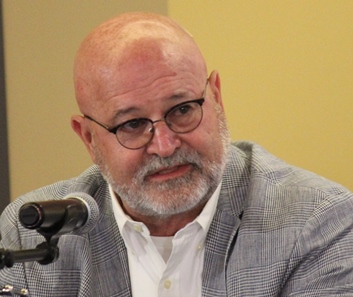
Rep. Stan Frownfelter, D-37th Dist., who is running as a write-in candidate, said the some issues have been addressed through juvenile justice bills and criminal justice bills. If the last session hadn’t been cut short by the pandemic, the bills might have gone through the committee last spring, he said.
Rep. Kathy Wolfe Moore, D-36th Dist., agreed that there are packages due to come out on criminal justice reform, but since the session was cut short, it didn’t happen.
Race relations here weren’t as difficult as they have been in other communities because of things this community has done, she said, including keeping a good relationship with minorities. Also, Wyandotte County trains every law enforcement officer in de-escalation techniques, she said. Going all-in on crisis intervention training has made a difference in the community, she added. The community also has been a leader in community policing for some decades, she added. While there still may be a lot to do, there also are some positive things here, she said.
Jordan Mackey, a Republican who is running for the 33rd District, said he is a Bonner Springs City Council member, and they have added body cameras and car cameras in Bonner Springs. “Our officers are not police officers, but peace officers,” he said. The officers go into the community, he said. He said Wyandotte County is doing a great job, being proactive, and has done it before the national news.
Greg Conchola, a former member of the Kansas City, Kansas, Police Department who is running as a Republican for the 32nd District, said they are doing an excellent job, with updated training on how to interact with the community, handling situations professionally and safely. They have some of the best training in the nation, he said. KCK doesn’t have some of the same problems as other cities because they are well trained, he said. The department needs to have adequate funding in order to continue that training, he said. Prevention is a much better path than reaction, he said.
Rep. Pam Curtis, D-32nd Dist., said Kansas City, Kansas, has benefited from having good community policing. Crime is solved fast when it’s done as a partnership between police and the community, she said, and KCK has benefited from that. They also have room to improve, she added.
There are reforms moving through the Legislature, Rep. Curtis said. The criminal justice reform commission has been meeting and a set of reforms will come through this session, she added. It’s a comprehensive reform recommendation package, and there are also some individual bills being introduced, she said. They also will have the civil asset forfeiture report, and this year they may have legislation on the issue, she said.
She said she worked on the auto expungement bill, removing a barrier from felons who have to mark the felon box on job applications. They are eligible for expungement, but some do not have the thousands to hire an attorney to take that off. Under the proposed bill, it would be automatically taken off, she added. Rep. Curtis said they could make headway on these issues this year.
Rep. Louis Ruiz, D-31st Dist., said this issue was pertinent now.
“It can happen in Kansas City, Kansas,” he said. “We’re not immune to things like that happening, especially when it comes to violence and police being involved.”
He cited a recent case where a teenager was shot and killed. He said the south side has been hit hard with shootings and deaths among young people.
Even though Kansas City, Kansas, is blessed with diversity, it also can be a burden, and as a Latino growing up here, he saw things happen that shouldn’t have happened, he said. He has discussed establishing a liaison between the Latino community and the police department.
“Right now, tensions are high, tempers are flaring,” he said. They need to emphasize mental health efforts and communication, he said. He hopes to have a longer legislative session to get involved with some of the issues and circumvent some things from happening.
Rep. Valdenia Winn, D-34th Dist., said there is a common theme in the comments of community engagement.
“We have to get our community members engaged with law enforcement,” she said. “Dialogue has to open. It is not there in the community relations that I see.”
When the George Floyd incident took place, on behalf of the Quad Caucus, made up of African American, Latino American, Native American and Asian American members, they submitted a statement to the House condemning the action, she said. Many signed on to two pieces of legislation; however the politics of the leadership were not recorded until the day before they adjourned, Rep. Winn said.
The civil asset forfeiture bill has ramifications, including with local law enforcement agencies that do take the assets, she said. Rep. Winn added she believes the Wyandotte County delegation will support the fair hearing and resolution of issues that are needed.
“A lot of the policies will govern other law enforcement agencies, and they may or may not be willing to open dialogue to address the issue,” Rep. Winn said.
The last day of the session, two members, one from each party, stated they had to open dialogue, she said. The legislators are trying and know the significance of the issues, she added.
What would the state do if federal assistance runs out for the unemployed? Most candidates were in favor of trying to help from the state level, but some doubted that there would be enough funding. The question from panelist Mary Rupert also included parts about what the state might do if housing assistance and small business assistance runs out. Some federal CARES Act funding assistance is scheduled to end Dec. 30, unless it is renewed by the federal government.
Rep. Winn said she would support the state finding funds, although she isn’t sure there are any remaining CARES Act funds. Especially she would support finding funds for rent assistance to prevent evictions and to provide some relief so small businesses can not only reopen, but rehire. The pandemic has wiped out a lot of growth, and she would support the state stepping up to find resources to try to boost the local community.
Rep. Ruiz said there has been a lot of unemployment in Wyandotte County, and the extension of benefits depends on what they get from the federal government. He said the governor has stated that that it would be hard to continue the same level of funding without the federal funds.
“I support looking for funds, trying to ascertain funds,” he said. The state can’t borrow money, and due to the last administration it is still trying to dig out of a hole, he added. The governor and administration will do the best they can to still maintain a standard of care for the citizens and workers of Kansas, he said.
Rep. Curtis said from March to July, she spent the bulk of her time helping residents with unemployment benefits and helping businesses to access grants.
“We have to figure out a way to help people survive until we’re able to return to some kind of normalcy, whatever that is,” she said. “We’re all suffering from a lack of having a nationally coordinated response.”
She said without additional help from the federal government, the cities and states will be in dire straits. She is all for prioritizing and trying to take care of people who are trying to survive, she added.
Conchola said the state received a significant amount of money from the federal government.
“I don’t know where that money went,” he said. Some should have gone to assist with unemployment benefits and getting small businesses up and running again, he added. He would support more funding from the federal government, if it was necessary, but with better oversight, so it would go where it’s needed, he said.
Rep. Burroughs said Kansas was granted $1.3 billion by the federal government, with Sedgwick and Johnson counties receiving direct funding. A little over $800 million was left for the rest of the state, and was divided by population size and the impact to communities of COVID-19. Wyandotte County received over $30 million that was divided among the cities of Kansas City, Kansas, Edwardsville, Bonner Springs, school districts and local agencies. The funds were to prevent the impact of COVID-19, paying for expenses such as personal protective gear.
He commended Gov. Laura Kelly for issuing emergency orders that prevented evictions during the pandemic; he also thanked front-line workers in harm’s way during the pandemic, and said they were fortunate to have the quality of Kansans who look out for other Kansans’ interests.
Rep. Burroughs said he is ready to make sure that the unemployed, underemployed and uninsured people of Kansas would receive benefits from any economic development package from the federal government to the state that would provide job growth and opportunities.
Mackey said this has been a passionate issue of his, since he is in the construction field. One of his goals as GOP county secretary here until August, was to be a “squeaky wheel” on the issue.
There are many hourly workers in Wyandotte County, including people on furloughs and layoffs, and they need to be supported, he said. “We need to start supporting our whole state,” he said.
Rep. Wolfe Moore was appointed by Gov. Kelly to serve on the SPARKS task force that decided how the federal CARES Act federal funding would be spent. She said the bulk of the money went to the counties, because they best know what the needs are. Additionally, they are still in the process of deciding allocations, and have already allocated much-needed funds to nursing homes that required personal protective gear and the ability to do mass testing. There were also allocations to health care, she said.
Some funding went to rent assistance and also, assistance is being offered to landlords in cases where renters are no longer occupying the premises because of COVID-19, she said. Child care for parents who were essential workers also received some funding. More money also was allocated for testing, she said, which is considered to be the way to reduce the virus by isolating those who test positive.
Rep. Frownfelter said while he is supportive of helping unemployed people, they have to be careful of moving funds around or they won’t have them for other programs that they need, such as education, foster care programs, mental health programs and Medicaid expansion. The state is required to have a balanced budget, unlike the federal government.
He said one reason they’re hurting now is the state went through a recession, and just as they were getting back on their feet again, they were hit with the pandemic. In the past years, the state gave breaks to the employers, instead of leaving it alone, he said. There could have been enough money there now if they had not reduced it, he believes. They didn’t think ahead for a recession or pandemic, he added.
Several other questions also were asked at the forum, which will be shown through Nov. 2 on the Kansas City Kansas Community College cable channel, Spectrum Channel 17 and Google Channel 141. It is also being shown on YouTube.
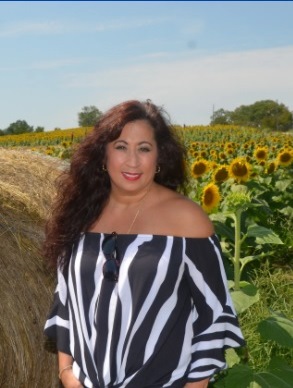
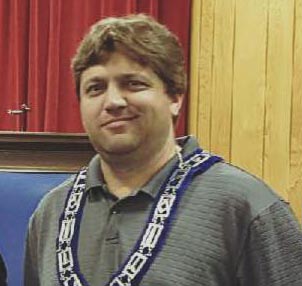
Kristina SmithKeith JordanRep. Stan FrownfelterAaron Coleman
Most election years, if a district has only one candidate on the ballot for the general election, it’s almost a sure bet the candidate will be elected.
This year, however, sees a campaign being mounted for write-in challengers to Aaron Coleman, 19, who upset Rep. Stan Frownfelter in the Democratic primary for the 37th District.
Rather than being “for” issues, the write-in candidates seem more motivated by being “against” Coleman, who during the primary campaign admitted to revenge porn and bullying when he was younger. There also were allegations of abuse against a girlfriend. Coleman also was criticized for social media comments that some said were inappropriate, such as wishing people who went to rallies without masks got COVID-19.
There may be many write-in candidates in the 37th District, and they are not required to register with the secretary of state’s office.
‘Stop Coleman’ effort announced
Today, a new “Stop Coleman” effort was announced, complete with a political action committee to provide funding.
“We thought it would be a good idea to create an organization that specifically focused on letting voters know about the conduct of Aaron Coleman,” said Edward Rosson, chairperson of the PAC. “While others figure out their strategy, we could be doing the work to let those others be successful.”
He said they plan to fund social media campaigns and mailers to voters in the 37th District.
Rosson, who lives in Lansing, Kansas, registered the Stop Coleman PAC to a post office box address in Lebo, Kansas, according to campaign finance records. The PAC’s treasurer, Jamie Jarvis, is in Lebo, which is in Coffey County.
While he doesn’t live in Wyandotte County, Rosson said he worked almost the entire election cycle in 2018 here with the Brent Welder campaign for Congress, then with the Progressive Turnout Project. This year, Rosson worked with the Bernie Sanders campaign in Iowa, and he is currently the 2nd Congressional District director for the Progressive Turnout Project.
“His (Coleman’s) platform is certainly progressive, but the things that came out about his conduct and his treatment of people is in my view anathema to progressive values,” Rosson said today. “You cannot consider yourself a progressive and harass and abuse people.”
He said he doesn’t think most of the voters in the 37th District had heard of Coleman’s past mistakes.
Rosson said he isn’t sure if the consensus alternative will be Rep. Frownfelter or if another write-in candidate will emerge.
He said by the end of today, he’ll probably have $200 in donations to the PAC that will be used for social media and for political literature to be distributed in the district.
Coleman has described himself as a progressive who is in favor of legalizing marijuana, universal health care, defunding the police and free community college tuition.
After winning the primary election, Coleman said he would withdraw, then a few days later he changed his mind and decided to stay in the contest.
Coleman said last month that he thought it would be too hard to run as a write-in candidate. He’s tried it himself in the past and it is too difficult, he said. He ran for governor previously, and also ran for Board of Public Utilities last year.
Although there has been much criticism of Coleman’s past behavior, one person who was in favor of Coleman staying in the race was State Sen. David Haley, D-4th Dist. Seven of the precincts in the 4th District also are in the 37th District.
Sen. Haley said he had been a supporter of juvenile justice initiatives in the past that call for second chances for juveniles, and he didn’t want to be inconsistent now and deny Coleman a second chance.
Write-in candidates have one thing in common – opposition to Coleman
There are three write-in candidates we’ve heard of so far: Rep. Stan Frownfelter, Kristina Smith and Keith Jordan.
The two other write-in candidates for the 37th District include Kristina Smith and Keith Jordan.
GOP candidate launches write-in campaign
Kristina Smith, the treasurer of the Wyandotte County Republican Central Committee, didn’t decide to run for office until after the June 1 filing deadline.
It wasn’t until Coleman came by her house to campaign that she thought about running, she said. They talked about a half-hour and “I just did not agree with his policies and I told him I didn’t agree with him,” she said.
Later, other information came out about him and then she decided to file her intention of being a candidate with the secretary of state, she said. Write-in candidates don’t have to file with the secretary of state or election office, according to officials.
She started her write-in campaign just a short time before the primary, and did not receive the 500 write-in votes necessary to get her name on the general election ballot, but she is not giving up, she said. She said she will try a write-in campaign at the general election.
“I’m pro-life, I support law enforcement,” Smith said. “My husband is a 32-year police veteran.”
The first thing Coleman mentioned to Smith was that he wanted to defund the Police Department. “I do not believe in that,” Smith said. “I believe we need strong law enforcement for our community.”
If in the future there are any tax increases presented to the Legislature, Smith said she would be in favor of cutting other places and not increasing taxes.
Smith is not in favor of legalizing marijuana, and doesn’t want Kansas to turn into Seattle or Portland, she said. There are a lot of other problems that come with legalizing marijuana, she added.
Smith, 52, is self-employed as a paralegal and bookkeeper. She has a son in the U.S. Marines and a daughter who is a cosmetologist.
She said a 19-year-old is not quite mature enough yet to understand some of the issues that go along with serving as a state legislator.
She works as a volunteer with the Republican Party, and has served as campaign treasurer for Sen. Kevin Braun, R-5th Dist., and worked with a few other state campaigns.
Smith has lived in the Turner area for 26 years. A Shawnee, Kansas, native, Smith attended Shawnee Mission Northwest High School and Johnson County Community College before leaving for a job with a law firm. When her children were in school at St. Joseph’s, she served as parent-teacher president and other volunteer positions.
Smith said she realizes the campaign will be a challenge.
“It is an uphill battle,” she said. “I have got all my brochures in print. We are walking the neighborhood.”
She plans to distribute yard signs later this month and hopes to have some campaign events in the future.
Jordan also a write-in candidate for 37th District
Keith Jordan, who ran for Kansas City, Kansas, mayor in the last mayoral election, also is a write-in candidate for the 37th District.
During the pandemic, Jordan is using some creative ways to reach voters, including a Facebook question-and-answer session tonight.
A broadcaster with radio KQRC-FM 98.9, “The Rock,” Jordan’s radio nickname is “T-Bone.”
“The plain and simple truth is the fact that I cannot in good faith and conscience allow Aaron Coleman to represent District 37,” Jordan said about his reasons for running. “That’s not who we are in this district.”
Even with a clean record, someone who is 19 is young for the position, he said.
“When I was 19, no way I was responsible enough to be doing anything in government,” he said.
Jordan, 46, is a Turner High School graduate who is a registered Democrat. He says he likes some of the Democratic platform and some of the Republican ideas.
“I’m just one of those down-the-middle people,” he said. “If it’s an idea that works, I don’t care whose it is.”
Jordan said he would probably be in favor of Medicaid expansion.
If marijuana is legalized, it would need to be federally regulated, he said. Legalization could be a way to help get rid of the state’s deficit and get more money into the state, he said. In some cases it has helped cancer patients deal with pain.
Although there are a lot of younger people advocating to defund the police, “to me this is ridiculous,” Jordan said.
He said the state should provide more funding to police for more training to deal with people who might have mental issues or be on drugs. He would advocate bonuses for officers who get certification in certain areas, he said. He added he is an advocate for a stronger police presence in the neighborhoods, with more contact with the community and youth to build trust.
He also would be in favor of more funding for local government, he said. He would offer incentives for local law enforcement to retain and hire qualified officers and for training.
Jordan said he is not in favor of any sex offenders being taken off the state’s sex offender list.
Jordan has an associate’s degree from Kansas City Kansas Community College, and after that, he went to work in radio, where he has been 26 years.
He also has coached youth sports, as well as has done volunteer work feeding the needy in the community. He also runs bingo for the Abdallah Shriners and has volunteered at other events as well.