
Rep. Davids outlines her priorities for economic stimulus package

Earlier this week, Rep. Sharice Davids, D-3rd Dist., outlined her priorities for Congress’ economic stimulus package to address the effect of the coronavirus on families, workers, businesses, and the economy as a whole.

“The coronavirus is causing an unprecedented crisis in our country – jeopardizing both the public safety and financial security of our families, workers, and businesses,” Rep. Davids said in a news release. “As we work to address this public health emergency and provide economic relief, I’m fighting to ensure that the priorities of Kansas and the Third District are incorporated in any stimulus package Congress puts forward. The economic security of the Midwest and Kansas is vital to the economic security of the entire country, and our region should not be overlooked.”


In a letter to Speaker Nancy Pelosi and Majority Leader Steny Hoyer, Rep. Davids called for Congress to include the following in any stimulus package:


• Protecting workers – Any stimulus package must provide appropriate guardrails to protect workers and ensure large corporations put the needs of those workers ahead of their executives and shareholders. As an example, companies receiving government grants or loans should be willing to guarantee all workers are kept on with a health plan and at least 70% of their present salary.

• Accountability — Lessons learned from the 2008 and 2009 stimulus and relief programs include the need for accountability where the lending and granting of federal money is involved. Strong systems for accountability must be present at every level at which federal money is being lent or dispersed. That includes prohibiting companies that receive federal funds from conducting stock buybacks, lobbying until debt has been repaid, and increasing executive compensation.

• Small business relief – A major focus of this economic stimulus package should be the immediate and significant relief of small business pressure. The most effective small business stimulus in this case would be zero or near-zero interest rate loans to provide for continuity of operations for businesses with 500 employees or fewer. We should also consider grant authority for loans to be converted into grants in instances of extreme economic hardship caused by coronavirus pandemic, and to advance no interest SBA loans to businesses to fund paid leave before the tax credit arrives.

• Child care — Schools and care facilities across the country have sent children home, with some states, like Kansas, cancelling the remainder of the school year. This has increased pressure on families, some of whom are working from home and providing childcare at the same time. To whatever extent possible, provisions must be made in the stimulus to fully support children, ensure distance learning is enacted where requested, and childcare facilities are given the opportunity to apply for small business relief during this crisis.

• Student loan debt relief – Last week, the Trump Administration announced its plans to waive student loan interest payments. This announcement, while encouraging, falls far short of the urgent need for immediate relief for millions of workers and families that must weather this crisis, and does little to help them keep their money. Proposals that would simply delay payments, like forbearance or deferment, are also inadequate. Enacting stimulus to directly forgive or relieve debt for these borrowers would mean more money staying with borrowers through this crisis.

Rep. Davids previously voted to pass two bipartisan pieces of legislation to meet immediate needs related to medical equipment, sick leave, unemployment insurance and more, both of which President Trump signed into law.

To view the entire letter, and additional measures Rep. Davids called for, visit https://davids.house.gov/sites/davids.house.gov/files/documents/03.21.2020%20-%20Rep.%20Davids%20Letter%20to%20Speaker%20Pelosi%20and%20Leader%20Hoyer%20About%20Stimulus%20Package%20-%20SIGNED.pdf.
Congress considering help for individuals, small businesses as COVID-19 stay-home restrictions go into place Tuesday

U.S. Sen. Jerry Moran, R-Kansas, said Monday that negotiations were ongoing between the White House and Congressional leaders to complete the third phase of relief for those affected by COVID-19.

“You can’t expect small businesses and individuals to bear the brunt and the burden of a global pandemic,” Sen. Moran said during a virtual news conference held by the University of Kansas Health System. He participated through a video link from Washington.

“This legislation is designed to provide some financial security, some ability to get by, while this circumstance is being faced by American citizens and American business,” he said.

The primary purpose of the bill is getting a direct check to people at medium to lower income levels, and another purpose is providing a loan guaranteed by the Small Business Administration to small businesses that agree to keep employees on the payroll. It would make it more likely a business could afford to pay salaries of people who work for them, he said, and if they keep them on the payroll, they would be reimbursed later.

Another provision would increase unemployment benefits by $600 per week for the next 13 weeks, and independent contractors and sole providers could be included in unemployment insurance, he said. Also, student loan payments could be delayed for 90 days under the bill.

“The economy can’t recover until people feel secure in their health,” Sen. Moran said. People need a sense of well-being, he said.

“The other part of this is to make sure our health care providers have the necessary resources,” Sen. Moran said.

There is $75 billion being considered for resources for health care providers, who are at the forefront of treating people who may have COVID-19, he said. Also, the bill provides funding for the Food and Drug Administration to move forward with tests more rapidly completed, and to find additional vaccines or cures.

If the legislation passes, there is financial support to take care of the circumstances that health care is facing today in Kansas and across the country, he said.

The amount of financial aid for cities and states is one of the stumbling blocks for this bill, Sen. Moran agreed. However, money is directed to local institutions such as hospitals and community mental health centers, he said.

This financial issues wouldn’t keep him from voting for the bill, he said. He said he wanted to make sure the money would be used specifically for dealing with COVID-19, not just bailing out a state that already has a financial problem.

Sen. Moran said he has had some success in getting some test kits out of the federal stockpile and sent to KDHE in Kansas. They also have got FDA to expedite approvals, and additional manufacturers are making test kits, and they are now being manufactured more rapidly, he said.

After Sen. Moran spoke at the news conference, the trillion-dollar bill did not pass in the Senate on Monday, and negotiations were continuing. Some Democrats have criticized the bill as having too much assistance for corporations, and were preparing alternative bills.

Dr. Lee Norman, Kansas secretary of health, said Kansas had 82 COVID-19 patients on Monday. It hasn’t doubled cases every three to four days, he said. COVID-19 isn’t treated with vaccines and there currently isn’t a cure for it, so they are relying on older health practices. The Kansas number was changed to 79 Monday evening, because some Douglas County cases were counted twice.

“If we want to continue to do well as a state, really pay attention to these public health practices. We will eventually have a vaccine, we will eventually have antiviral medications but we’re just not there yet,” he said.

Tammy Peterman, president of the Kansas City Division, the University of Kansas Health System, said they have further restricted access to the health center, restricting visitors to zero, with some exceptions. Employees and visitors are monitored by taking their temperature as they come in, she said. They also have postponed elective surgery in order to conserve personal protective equipment and supplies.

KU Health System also has reduced clinic visits while expanding telemedicine, she said. It is also monitoring its supplies closely, she added. KU Health System also is communicating with other health professionals in other institutions and with community leaders, she said.

KU Hospital took care of the first patient diagnosed with COVID-19 in Kansas, and this morning, there were eight positive COVID-19 patients at the hospital, she said.

This morning there were 40 patients at KU Hospital waiting on test results to determine if they have COVID-19, she said. That number has increased over the past few weeks, she said. The hospital uses a lot of supplies and equipment on those patients until they get the results back to determine if they have COVID-19, she said.

“We’re monitoring what’s happening on the coasts and across the country, and we’re preparing, because we know there will be an increase in in-patient bed utilization in our city,” she said. They are working with other hospitals to be prepared, she added.

“We have this really great city, and we need to do what we always do, which is come together as we are, because we can have an impact on this,” Peterman said. “We can bend that curve, we know that. If we follow the instructions, if we follow the guidance, we can have an impact on this and truly make a difference here in Kansas City.”

Dr. Steve Stites, chief medical officer of the University of Kansas Health System, said there is nothing more important from a public health perspective than to stay home.

People need to channel their fears about COVID-19 into trying to help people work together to control it, he said.

“The way to do it is to stay home, keep your distance, 6 feet away, wash your hands, don’t touch your face,” he said. “Those are the basic public health principles that really do work.”

If you’re not touching a doorknob among a group of people in a different environment, then your risk of getting the virus is a lot lower, he said. Even if someone else is sick at home, you can put them in a part of the home that keeps them isolated, he said.

If people stay home and isolate, there will be fewer cases and flatten the curve, Dr. Stites said. If they flatten the curve, they can take care of people so the hospitals and intensive care units won’t get overwhelmed, he said.

It is incredibly important to follow the shelter at home, stay at home policy, Dr. Stites said.

“Do that, avoid the doorknob principle, and make sure you follow the great public health principles that we know work,” Dr. Stites said. “At the end of the day, we can channel our fear into being healthier and doing the right thing. And that will help us get through this crisis faster and better.”

To view a video of the news conference, which includes much more information, visit https://www.facebook.com/kuhospital/videos/2546243839026780/.

The UG’s COVID-19 response website is at
https://alpha.wycokck.org/Coronavirus-COVID-19-Information.


The Kansas COVID-19 website is at
https://govstatus.egov.com/coronavirus.


COVID-19 information from the CDC is at https://www.cdc.gov/coronavirus/2019-nCoV/index.html.

The KU Health Systems COVID-19 information is at https://www.kansashealthsystem.com/news-room/news/2020/03/coronavirus-information?fbclid=IwAR1EDAakbEz6H4NTnSzhPetzzttB2zjpgs85VjKYQ3txt0XdRhs2rcx-v5c#visitor.

U.S. Supreme Court rules against Kansas death row inmate by limiting insanity defense

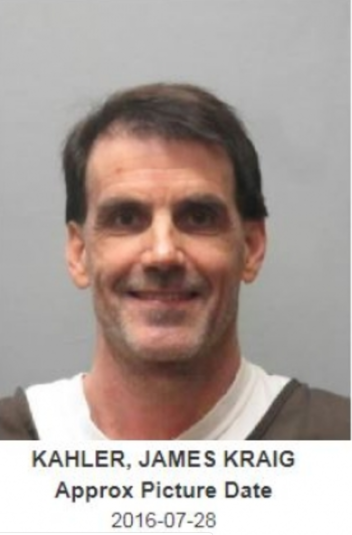
James Kahler was convicted of murdering four family members in 2009. (Photo from Kansas Department of Corrections)

by Chris Haxel, Kansas News Service

In a ruling that could have implications for criminal cases nationwide, the U.S. Supreme Court on Monday ruled against a Kansas death row inmate who argued that the state’s laws regarding the insanity defense are unconstitutional.

Kansas and three other states — Utah, Montana and Idaho — have banished the insanity defense as a formal mechanism. Alaska also has severe restrictions on its use.

The facts underlying the case date to 2009, when James Kraig Kahler murdered his estranged wife, their two teenage daughters and his wife’s grandmother in Burlingame, about 30 miles south of Topeka.

Kahler’s attorneys said at trial and in subsequent appeals that he had spiraled into a mental health crisis in the months preceding the murders and was psychotic during the attack.

They argued that Kansas has effectively abolished the right to use insanity as a defense in criminal cases. That, they said, is unconstitutional because it violated Kahler’s right to due process and resulted in excessive punishment.

But in their 6-3 decision, the justices affirmed an earlier decision by the Kansas Supreme Court and upheld Kahler’s conviction.

Writing for the majority, Justice Elena Kagan argued that Kansas does not bar, but rather “channels,” use of the insanity defense into the trial and sentencing phases.

In other words, defendants are able to raise the issue of insanity in an attempt to prevent conviction, and then can later request a sentence involving hospitalization instead of prison.

Kagan was joined in the opinion by Justices John Roberts, Clarence Thomas, Samuel Alito, Neil Gorsuch and Brett Kavanaugh.

Many states use a two-pronged legal test for the insanity defense known as the “M’Naghten Rule,” which holds that criminal defendants may be innocent if they either did not understand the nature of their actions when they committed the offense or if they didn’t realize what they were doing was wrong.

But according to the Supreme Court’s majority opinion, 16 states have refined the test to focus on whether the defendant understands his or her act was illegal, as opposed to morally wrong.

Therefore, Kagan wrote, a ruling in Kahler’s favor “would require striking down not only the five state laws like Kansas’s, but 16 others as well.”

“Defining the precise relationship between criminal culpability and mental illness involves examining the workings of the brain, the purposes of the criminal law, the ideas of free will and responsibility,” Kagan wrote.

“It is a project … that should be open to revision over time, as new medical knowledge emerges and as legal and moral norms evolve. Which is all to say that it is a project for state governance, not constitutional law.”

Writing in dissent, Stephen Breyer argued that the Kansas law “requires conviction of a broad swath of defendants who are obviously insane and would be adjudged not guilty under any traditional form of the defense.”

Breyer was joined in his dissent by Justices Ruth Bader Ginsburg and Sonia Sotomayor.

Chris Haxel is a reporter for KCUR 89.3. Email him at chaxel@kcur.org, and follow him on Twitter @ChrisHaxel.
Kansas News Service stories and photos may be republished at no cost with proper attribution and a link back to kcur.org.
See more at
https://www.kcur.org/post/us-supreme-court-rules-against-kansas-death-row-inmate-limiting-insanity-defense.