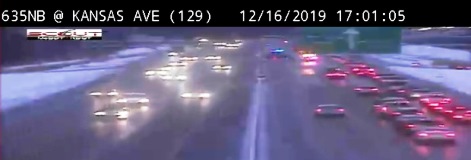
Accident reported at I-635 and Kansas
Serving Kansas City (Wyandotte County) Kansas for over 50 years!

A community meeting is planned from 5:30 to 7 p.m. Tuesday, Dec. 17, at the James P. Davis Hall, 91st and Leavenworth Road, at Wyandotte County Lake, Kansas City, Kansas.
There is a proposal to replat two houses at Wyandotte County Lake.
According to UG information, it was proposed to remove the houses from the Wyandotte County Lake Park main parcel, as an effort to put the lake houses on the property tax rolls, while allowing the rest of the lake property to be tax-exempt.
No buildings would be removed, according to UG information. There would be no new construction, and no alteration of public spaces, according to UG information.
According to the UG, the lake houses were lived in or rented out since they were constructed in the 1930s. The UG would like to keep them occupied to be easier to maintain and to provide a revenue stream offsetting costs associated with the property, according to UG information.
The City Planning Commission recently held a meeting on this item, and decided to hold it over for 60 days, until Jan. 13, and get more public feedback. The planning commission discussed the advantages and disadvantages of this move, including legal and tax ramifications.
There was an opinion expressed by some planning commission members that the UG needed to develop a long-range policy for the park. Some opposition to the change was expressed by nearby residents. The item eventually may go to the full UG Commission for consideration, sometime in the future.
‘Tis the season for scams.
Scams often pop up during the holidays, and the Board of Public Utilities is warning customers to beware of telephone scams.
According to David Mehlhaff, spokesman for the BPU, scammers may call, pretending to be from the utility, and could threaten customers with disconnection if they don’t pay them immediately. Sometimes the scammer demands payment in gift cards.
Mehlhaff said the scams often get worse during the holidays.
The BPU doesn’t call the customer and threaten to disconnect them immediately if they don’t pay something, he said. Instead, the BPU will send out a “past due” bill, then a disconnection notice, and a courtesy robo call, he said.
But the BPU doesn’t call up as a person and tell the customer to make an immediate payment or the electricity will be shut off, he said.
For the six years the scams have been going on, there has only been one BPU customer he knows of who has been tricked into sending money to a scammer, he said.
The BPU has been reminding people not to fall for scams for several years, and most people know if they are behind on their utility payments, he added.
People who have questions about their bills may call the BPU customer service department at 913-573-9190.
Mehlhaff added some other important safety tips to keep in mind: