
Gordon election complaint not being pursued

by Mary Rupert

A complaint made by Board of Public Utilities candidate Thomas H. Gordon on Monday, March 9, at a voter canvass is not being pursued, according to Wyandotte County Election Commissioner Bruce Newby.

“There is no pending investigation and nothing to be resolved at this point,” Newby said.

Newby said he is acting on the advice from a legal opinion by a Unified Government attorney that the statute on the objections board deals with the nomination process and not the conduct of the election. The statute referred to nomination and declaration of candidacy, he said. The objections board is not used for complaints that are made after the election about the way the election was conducted.

Most recently, the objections board was used for questions concerning eligibility including federal offices in which Sen. Pat Roberts’ residency was challenged, and in which President Obama’s birthplace was challenged. In both cases, the candidates won this challenge and remained on the ballot.

The only two ways to challenge an election are to ask for a recount or to file suit in district court contesting the election, Newby said. The deadline now has passed for a recount for Gordon. Nathan Barnes requested a recount in the 1st District, UG Commission at large contest, after only one vote separated second and third places, and there were no changes to that position after the recount last week.

On March 9, Gordon stated at the Board of Canvassers meeting that he was filing a complaint with the objections board; however, Gordon did not state the specific details, such as specific votes he was challenging, when he was asked at that time. He cited statute numbers at the time.

Newby said Gordon’s written complaint mentioned that some of the news media reported different results on election night. Some of the media were reporting the partial results as they came in. Apparently a television news outlet used the election office’s third report, which was not a final result, instead of the final count of numbers on election night. Newby said the complaint seemed to imply that Newby had some sort of control over what the media reported.

“I am not now and have never been in control of [the media outlet],” Newby said.

Newby also said Gordon’s complaint asked the election commissioner to declare him as the winner of the BPU contest as a remedy.

Newby also stated that at no time on election night was Gordon in first or second places. Only first and second places go on to the general election.

At the vote canvass on March 9, the Board of Canvassers decided to count 43 provisional votes and not to count an additional 24 votes. That would not have made a difference in Gordon’s contest, as Gordon was 791 votes behind the first-place candidate, Chris McCord, and 656 votes behind the second-place candidate, Norm Scott.

Gordon, when he was reached Monday afternoon, said that he had not received any written notification from the election commissioner’s office about the outcome of his complaint.

Send your comments to Wyandotte Daily Online at news@wyandottepublishing.com.
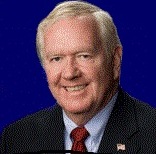
Legislative update from Sen. Steve Fitzgerald, R-5th Dist.

Sen. Steve Fitzgerald

Sen. Steve Fitzgerald of Leavenworth, a Republican, represents the 5th District, which includes the Piper area of Kansas City, Kan.

Fighting over school dollars
Since its inception in 1992 the Kansas school finance formula has been a matter of contention in the courts. It has fueled both an ever increasing amount of money going to the school districts and constant lawsuits for even more money. And, why not? The lawyers suing the taxpayers are paid with tax dollars that are allocated for education.

At 49.2 percent Kansas is now third in the nation (up from fourth) for the percentage of budget that is allocated to K-12 education, far ahead of Massachusetts at 19.4 percent. Number two in the nation is Alabama at 51.3 percent. Continuing with the old formula would soon have us at number one in the nation – which could actually happen even with the new funding grants that are being adopted.

Educational achievement is another story. In virtually every category there has been little or no improvement in overall scores while every measure of spending is up or way up. There are many factors at play and money is only one.

Last year the legislature put $130 million into the school formula for equalization of school funding (helping poor districts) and two notable things happened. The amount became $200 million almost immediately but the legislature was not informed until months later – just the way the formula works. The formula also gave Johnson County schools $55 million of the money because of their poverty.

Meanwhile, other districts are struggling with funding shortfalls. Just because more money goes into the top does not mean that it gets to the districts that need it or to the classrooms and teachers that deserve it.
Money allocated for education has been going into the bank. Cash reserves of the school districts overall have been growing to embarrassing levels. There are many reasons for keeping reserves, but in many cases the increase has been significant. In the last four years the amount of money going to the school has been going up, the amount of money going into the district banks has been going up and the amount going to the lawyers suing for even more has been going up. The taxpayers are paying, excellent and good teachers are not getting the monetary recognition they deserve, and student achievement is stagnant. Something had to change.

Historically, Kansas schools have produced excellent students, good students, and other students. Teachers have a great effect on students; we commend them constantly and it is well deserved.

Poor teachers should be seeking other employment and it should not be difficult to help them on their way. Last year the legislature ended state mandated “tenure” for teachers and gave school districts more latitude in releasing under-performers. A bill in the legislature would help reward top performing teachers with significant monetary awards. But, it is not the role of the legislature to determine teacher pay – that belongs to the local school boards.

School boards like the old formula; they want more money. Teacher unions want more money. Well, to be fair, everyone wants more money. Not everyone can claim to have death grip on the future of the children – so the demands of the school-union group get a lot of attention and respect. Everyone wants the kids to have a good education and the best shot possible – everyone.

But, those questioning the costs are vilified as children haters, etc. The messages get pretty intense. Nonetheless, the legislature is passing a bill to stop using the old formula and go to block grants for the next few years while the funding issue is re-examined.

The absolute need for a change is convincing enough that legislators in both houses recognize that a complete overhaul is needed and “just give them more money” is not the answer that the teachers, the children, the parents, or the taxpayers deserve. A new look that will better allocate funds to actually result in better recognition of teaching excellence and increased student achievement is needed.

Coalition seeks federal approval for summer meals project

State and several nonprofits hope to feed more children in rural areas when school is out
by Jim McLean, KHI News Service

The state of Kansas and four nonprofit organizations are seeking federal approval to conduct an experiment that they hope will boost participation in a summer meals program that now is serving only a fraction of eligible children.

Led by the Kansas State Department of Education, the coalition is asking the U.S. Department of Agriculture to temporarily waive some rules so that it can conduct a demonstration project to feed needy children in rural parts of the state when school is out for the summer.

Last year, fewer than 7 percent of Kansas children who were eligible for free or reduced-price lunches during the school year took advantage of the Summer Food Service Program. One of the biggest reasons for the low participation was the fact that there were no meal sites in 44 rural counties.

Cheryl Johnson, director of child nutrition and wellness for KSDE, said federal rules that require children to travel to congregate meal sites could be part of the problem. The waiver would test that theory by allowing KSDE and its nonprofit partners to feed children at congregate sites one day but send them home with packaged meals for the next day.

“Parents wouldn’t have to drive their children to the congregate site each day,” Johnson said. “There would be the benefits of the congregate meal — the socialization and the activities — on some days, but they would also have healthy nutrition the following day without the transportation costs.”

The Kansas Food Bank, Harvesters Community Food Network, Kansas Health Foundation and Kansas Appleseed joined with KSDE to submit the waiver request on Feb. 20.

“Kansas ranks 48th in the nation in the number of children fed when school is not in session,” the applicants wrote in the justification section of the proposal. “We would like to evaluate in specific rural communities in Kansas whether the opportunity to provide meals at a congregate site a minimum of two to three days per week with shelf-stable meals for the other days of the week would encourage and increase participation in rural areas of Kansas and thus decrease food insecurity among Kansas children.”

KSDE and its partners hope to use the demonstration project and other initiatives to increase the number of meals served this summer to 1.4 million, a 20 percent increase over last year.

The overall cost of the summer meals program would rise if participation increased, but the demonstration project wouldn’t generate any additional administrative costs, according to the waiver application.

The Kansas food bank, which is based in Wichita, and the Harvesters network, which is based in the Kansas City area, would recruit volunteers to staff 12 demonstration-project sites.

A Summer Meals Summit convened in January by the Kansas Health Foundation helped prompt the idea for the demonstration project. At that summit, Audrey Rowe, the administration of the USDA Food and Nutrition Service, said many of the tens of thousands of Kansas children who qualify for free and reduced-price meals during the school year go hungry in the summer.

“Summer is when food insecurity among children increases dramatically,” Rowe said. “With our partners in the states, we’re looking at ways to address that gap.”

Filling the gaps in rural areas of the state may not be the only challenge faced by state officials and the more than 120 sponsors of the summer meals programs. Recent cuts in K-12 funding ordered by Gov. Sam Brownback to help avert state budget shortfalls have prompted the Topeka school district and some others to contemplate shutting down their meal sites.

KSDE is working on a contingency plan, Johnson said.

“We are working with community organizations in advance trying to come up with ways we can still try to meet the need if we do have reduced school sites,” she said.

In addition, Johnson said, KSDE is waiting to see if USDA offers funding to help states and volunteer organizations transform buses and vans into rolling meal dispensaries. If funding is available, Johnson said, several school districts and site sponsors are eager to take meals to “wherever kids might be during the summer.”

That could be community swimming pools, baseball fields, libraries or even “the Walmart parking lot,” she said.

The Kansas Health Foundation is primary funder of the Kansas Health Institute, the parent organization of the editorially independent KHI News Service.
The nonprofit KHI News Service is an editorially independent initiative of the Kansas Health Institute and a partner in the Heartland Health Monitor reporting collaboration. All stories and photos may be republished at no cost with proper attribution and a link back to KHI.org when a story is reposted online.

– See more at http://www.khi.org/news/article/coalition-seeks-federal-approval-for-summer-meals-project#sthash.Yu1OTacq.dpuf