Sponsor says long-awaited hospital association bill provides opportunity for lawmakers and Brownback to craft a ‘Kansas plan’
by Jim McLean
Now there are three.
Medicaid expansion bills, that is.
After months of behind-the-scenes negotiations with legislators and members of Gov. Sam Brownback’s administration, the Kansas Hospital Association has introduced its expansion bill.
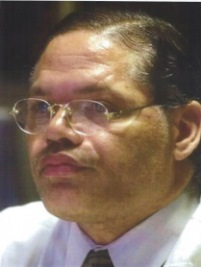
Rep. Don Hill, a moderate Republican from Emporia, requested its introduction in the House Appropriations Committee.
The bill does not outline an expansion plan. Rather, it repeals language added to a budget bill in 2013 that prohibits the governor from pursuing expansion without the approval of the Legislature.
“It’s a very simple bill that really just says to the governor and the administration that the Legislature is ready to get out of the way if the governor believes that moving ahead with KanCare expansion is the appropriate and prudent thing to do,” Hill said.
The other two expansion bills are more proscriptive. One, introduced by Rep. Jim Ward, a Wichita Democrat, would simply expand Medicaid eligibility to the threshold set in the Affordable Care Act. The second, introduced earlier this week by the House Vision 2020 Committee, is modeled after alternative plans crafted by other red-state governors and includes an assessment on hospital revenues to cover the state’s share of expansion costs.
Rep. Tom Sloan, a moderate Republican from Lawrence and chairman of the 2020 committee, said even though the federal government is committed to covering most of the cost of expansion, supporters need to identify how the state can cover its portion of the costs without worsening its budget problems.
Even though Republican leaders have blocked consideration of expansion for two years, Hill said Brownback has remained willing to listen to those wanting to negotiate a “Kansas plan” with the Obama administration.
“For almost a year now it’s my understanding that members of the Kansas Hospital Association have been working very closely with members of the administration on what a Kansas plan might look like,” Hill said.
Hill said he and some moderate Republican colleagues also recently met with the governor to discuss expansion. And while the governor didn’t signal that he was ready to move forward, he remains open to talking about it.
“He (Brownback) has been very careful not to say that he flat out opposes Medicaid expansion,” Hill said, adding that recent efforts by Republican governors to pursue more private-sector approaches to expansion could be “a game changer” on the issue.
HHS open to conversations
Even though the bill backed by the state’s hospitals doesn’t lay out a plan, the association has drafted a list of principles that it believes any Kansas plan should embody. Those principles include helping low-income Kansans get private coverage when possible and requiring those made eligible for KanCare by expansion to pay a small portion of their health care costs.
U.S. Health and Human Services Secretary Sylvia Burwell said she is open to negotiating an expansion plan with the Brownback administration.
“One of the first things I did as secretary is go to the National Governors Association and make sure the governors knew I’m open to these conversations,” Burwell said this week in an interview with KCUR, a partner with the KHI News Service in the Heartland Health Monitor reporting collaboration.
“We know different states have different needs,” Burwell said. “There are some fundamentals that are important to making health insurance work. Those we need. Beyond that, in terms of how people think about incentives and programs, are things we can have discussions about.”
Kansas’ privatized Medicaid program, KanCare, covers about 425,000 children and low-income, disabled and elderly adults. But that number includes relatively few able-bodied adults.
Adults with dependent children can participate in KanCare, but only if they have incomes below 33 percent of the federal poverty level, annually $7,770 for a family of four. Adults without children aren’t eligible for coverage no matter how poor they are.
Expansion would make all Kansans with incomes up to 138 percent of poverty eligible for KanCare. The eligibility cap would be set at $16,105 for an individual and $32,913 for a family of four.
Filling the coverage gap
Expansion would make Marcillene Dover eligible for KanCare coverage.
Dover, a 21-year-old Wichita State University student, was diagnosed last year with multiple sclerosis. She talked about her illness earlier this week at the Statehouse, where she and others from the National Multiple Sclerosis Society were lobbying for Medicaid expansion.
“I wanted to crawl up into a little ball and give up on my life, but that’s not what I did,” Dover said. “Instead I had to figure out how I was going to pay for this new and very expensive part of my life.”
Dover is uninsured. As a full-time student, she was eligible for a Kansas Board of Regents health plan. But the premiums of almost $1,500 a year were unaffordable for her, and her complex medical needs still would have saddled her with large out-of-pocket expenses.
Dover falls into a coverage gap that affects people who don’t meet current Medicaid eligibility requirements but earn too little to qualify for federal subsidies that help cover the cost of private coverage in the Affordable Care Act marketplace.
Project Access, a charitable effort of the Central Plains Health Care Partnership and the Medical Society of Sedgwick County, is helping to pay for medications that otherwise would cost Dover $5,000 per month. But, she said, countless uninsured Kansans living with disabling diseases aren’t getting any help.
“That’s why we need to expand Medicaid in Kansas, and in every other state for that matter,” Dover said. “No one should have to go through receiving this devastating diagnosis and then feel further devastation as they wonder how they will get the care that they need.”
Her story resonated with Sen. Dan Kerschen, a Garden Plain Republican, one of the lawmakers who will need to be convinced for any expansion plan to pass.
Kerschen, whose 34-year-old daughter suffers from multiple sclerosis, said Dover’s story gave him flashbacks to his daughter’s 2008 diagnosis. But when asked if it had persuaded him to support expansion, Kerschen hedged.
“It’s probably a direction we’re probably going to have to take if we get the right combination,” he said.
Getting “the right combination” would require lawmakers to schedule hearings and quickly start piecing together a compromise bill. That’s not likely to happen unless Brownback makes it clear to legislative leaders he’s ready to move forward, something he’s given no indication he’s planning to do.
Eileen Hawley, Brownback’s spokesperson, declined comment when asked about the governor’s intentions on Medicaid expansion except to say that she wasn’t aware of the discussions involving the governor that Hill described.
The next step for supporters, Hill said, will be to convince Rep. Dan Hawkins, a Wichita Republican and chairman of the House Health and Human Services Committee, to schedule hearings on the expansion bill.
“I think there is quite a bit of support on that committee – bipartisan support – to at the very least have hearings,” Hill said.
— KHI News Service reporter Andy Marso contributed to this story.
The nonprofit KHI News Service is an editorially independent initiative of the Kansas Health Institute and a partner in the Heartland Health Monitor reporting collaboration. All stories and photos may be republished at no cost with proper attribution and a link back to KHI.org when a story is reposted online.
– See more at http://www.khi.org/news/article/another-medicaid-expansion-bill-surfaces-in-house-committee#sthash.OKtFErTe.dpuf