
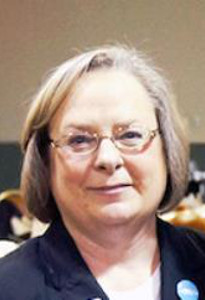
Legislative update from State Rep. Pam Curtis, D-32nd Dist.
Jan. 24, 2015
No matter how old you are, it is never easy when you lose a parent. My dad, Richard Horton, passed away on Jan. 13. He was a strong, independent and wise man with a great sense of humor, and he lived life on his own terms to the very end. On behalf of my family, thank you for your expressions of sympathy and comfort and for keeping us in your thoughts and prayers at this time. He will be truly missed by those that loved him.
As your state representative, one of my top priorities is ensuring that I remain accountable and accessible to the people I serve. In order to do this, I attend community meetings and events, and I meet with our neighborhood and business leaders throughout the year. While the Legislature is in session, I do my best to stay in touch and keep you informed by email, and I spend countless hours every week helping my constituents solve problems.
The 2015 legislative session is just getting underway, and I am looking forward to serving on the following committees: Children and Seniors, Local Government, Vision 2020 and Judiciary. This year I am very pleased to have an intern, Kelly Cordingley from the University of Kansas, and an assistant, Pam Parker, working with me during session.
It remains an incredible honor to represent our community in the Kansas House of Representatives. If I can be of service to you or anyone you know, call my office at 785-296-7371, or email me at pam.curtis@house.ks.gov.
Pam Curtis
State representative, District 32
In this edition:
• Budget cuts
• Taxes
• KPERS
• KDOT
• Education funding
• Judicial selection
• Changes to Kansas elections
Budget-cuts
Acknowledging that the current budget trajectory is unsustainable and that difficult decisions need to be made, Gov. Brownback released his budget proposals for fiscal years 2016 and 2017.
To help fill the $1 billion budget shortfall over the next five years, Brownback proposed:
• Raising taxes to generate $211 million in income for the state,
• Reducing scheduled investments to KPERS (Kansas State Employee Retirement System) totaling $132 million,
• Raiding $300 million from the State Highway Fund,
• Making additional cuts to state agencies budgets, and
• Holding investments in education flat.
Gov. Brownback’s proposal serves as starting point for the legislature to debate and draft a final budget.
Taxes
In his State of the State address last week, Gov. Brownback made it clear that he would continue his failed experiment no matter what the cost, and his budget proposal reflects that. The governor has proposed a four-part tax plan that raises $211 million in revenue by:
1. Freezing income tax rates rather than allowing scheduled tax cuts to go into effect in 2016, 2017, and 2018.
2. Increasing consumption taxes on cigarettes by an additional 15% (or $1.50 a pack) and on liquor by an additional 4 percent.
3. Instituting a tax amnesty program that encourages delinquent taxpayers to pay by removing penalties and fees for tax accrued prior to Dec. 31, 2013.
4. Accelerating the gradual reduction of income tax deductions to 50 percent in 2015.
All four sources of revenue are a one-time only means to an end, and are not stable sources of revenue. Brownback’s proposal fills the self-created budget hole, but does not address the systemic problems that have created the shortfall.
KPERS
The Kansas Public Employee Retirement System trust fund is scheduled to mature in 2033 if the state continues to make its planned investments. Gov. Brownback’s proposal includes changes to the current system to help cover the projected $1 billion budget deficit. The proposal suggests that the state:
1) Reduce the state’s statutory contribution rate for the 2015, 2016, and 2017 fiscal years and,
2) Issue $1.5 billion is pension obligation bonds.
Reductions to the state’s contribution would force the fund’s maturity date into 2043, and would cost the state an additional $3.7 billion in interest. To put that number into perspective, that is half of the state’s annual budget.
Issuing bonds to cover such a large debt is also concerning, as it is the equivalent of using one credit card to pay off another. So while this proposal will push back payments and free up some cash to help cover the budget deficit in the short term, eventually the debt will have to be paid plus interest. With thousands of Kansas seniors already relying on our pension fund and an entire generation of Baby Boomers on the verge of entering the system, it is critical that the Legislature ensure the retirement security of public servants.
KDOT
Gov. Brownback has proposed raiding more that $300 million from the State Highway Fund to help cover the projected shortfalls over the next three years.
FY 2015 $608 million
FY 2016 $636 million
FY 2016 $718 million
Total $1.96 billion
The ten-year transportation plan is one of the biggest jobs creators in our state. Should we continue to rely on transportation funds to cover the state’s budget shortfall, projects will be not just be delayed, but canceled. Additionally, the safety of our roads and transportation infrastructure and our state’s economic recovery and growth will be put at risk.
Education funding
Citing the complexity of the current formula and the growing cost of education, Gov. Brownback proposed throwing out the current school finance formula and replacing the formula with block grant funding to school districts until a new formula could be written.
His proposal would in essence freeze the amount of money being invested in K-12 education, despite a court order last month finding the state to be inadequately funding public education by at least $500 million. We will know more about how the block grant funding will work and the impact on individual school districts when a bill is introduced in the coming weeks. Meanwhile, I will continue to fight to properly fund our schools so our students receive the high-quality education they need and deserve.
Judicial selection
In 1958, the Kansas electorate amended the Constitution so that it reflected the state’s views that the process of appointing justices should be fair, ethical, and free of political games. In his State of the State address, Gov. Brownback called for a change in the way we select state Supreme Court justices. Currently, a nine-person commission nominates three qualified candidates, and the governor chooses from those candidates. Three concurrent resolutions have been introduced in the House to change the nominating process.
• The first bill establishes partisan judicial elections, which would take place during the general election immediately following the vacancy of a seat.
• The second bill grants the governor the power to appoint a judge subject to confirmation by the Senate.
• The third bill restructures the nominating committee; the speaker of the House, the president of the Senate, and the governor would each appoint three people for a total of nine, and the governor would select a chair. Currently the committee is made up of four non-attorneys appointed by the Governor, four attorneys selected by attorneys in each of the state’s four Congressional Districts, and a chair of the commission who is an attorney elected by attorneys in a statewide vote.
Allowing the governor or legislators to appoint justices compromises the non-partisan nature of the court, which plays a critical role in the system of checks and balances.
Changes to Kansas elections
Last week, Secretary of State Kris Kobach proposed three initiatives that would drastically change elections in Kansas.
• His first proposal would reinstitute straight party voting, an outdated measure which would allow voters to check a single box to cast a vote for every member of a political party on the ballot.
• Kobach’s second proposal would grant him the ability to prosecute voter fraud in Kansas. The measure failed in 2013 before the House of Representatives because the prosecuting authority lies with the respective county and district attorneys.
• Kobach also sought to make death the only allowable circumstance a candidate could remove their name from a ballot.
Gov. Brownback is also championing an initiative that would change Kansas elections by moving local and municipal elections to November to coincide with the general election. Local governments have almost unanimously come out opposed to this issue out of fear the move would politicize currently non-partisan offices.